“Harry Pitt Scott’s incisive analysis of financial petrocultures reveals how the narratives of energy transition are shaped and constrained by the imperatives of finance. This remarkable work reshapes our understanding of energy systems, offering a critique that is as urgent as it is transformative.” (Professor Imre Szeman, Director of the Institute for Environment, Conservation, and Sustainability, University of Toronto)
“This brilliantly expansive and illuminating book should be essential reading within critical studies of energy, finance and ecology, offering a rigorous aesthetics and history of petrocultures that foregrounds the centrality of financialisation. Through sharp, coruscating readings of a rich interdisciplinary archive including novels, architecture, infrastructure, visual media, and film, it constructs a new cognitive map of energy transition since the 1970s, revealing how energy narratives mediate the fundamental contradiction through which finance both engenders and constrains the possibility for decarbonised futures.” (Dr Sharae Deckard, Associate Professor in World Literature, University College Dublin)
“A magnificent contribution to the field of the energy humanities. Pitt Scott’s ground-breaking study of the relationship between petroculture, finance, and aesthetics represents a major critical intervention into how we think, frame, and narrate energy futures.” (Dr Michael Niblett, Associate Professor in Modern World Literature, University of Warwick)
“This innovative, rigorous and compelling study makes clear why we can’t think about oil without thinking about finance. Offering a timely and highly original intervention in the field of energy humanities, Financial Petroleum Cultures asks us to attend to the way in which finance has not only come to determine oil markets, but the oil imaginary. Essential reading for anyone interested in understanding the petrocultural legacies of the last fifty years – and their implications for the future.” (Dr Peter Adkins, Lecturer in Modernist Literature, University of Edinburgh)
“Harry Pitt Scott’s incisive analysis of financial petrocultures reveals how the narratives of energy transition are shaped and constrained by the imperatives of finance. This remarkable work reshapes our understanding of energy systems, offering a critique that is as urgent as it is transformative.”
Professor Imre Szeman, Director of the Institute for Environment, Conservation, and Sustainability, University of Toronto.
“This brilliantly expansive and illuminating book should be essential reading within critical studies of energy, finance and ecology, offering a rigorous aesthetics and history of petrocultures that foregrounds the centrality of financialisation, revealing how energy narratives mediate the fundamental contradiction through which finance both engenders and constrains the possibility for decarbonised futures.”
Dr Sharae Deckard, Associate Professor in World Literature, University College Dublin
“A magnificent contribution to the field of the energy humanities. Pitt Scott’s ground-breaking study of the relationship between petroculture, finance, and aesthetics represents a major critical intervention into how we think, frame, and narrate energy futures.”
Dr Michael Niblett, Associate Professor in Modern World Literature, University of Warwick
“This innovative, rigorous and compelling study makes clear why we can’t think about oil without thinking about finance. Essential reading for anyone interested in understanding the petrocultural legacies of the last fifty years – and their implications for the future.”
Dr Peter Adkins, Lecturer in Modernist Literature, University of Edinburgh
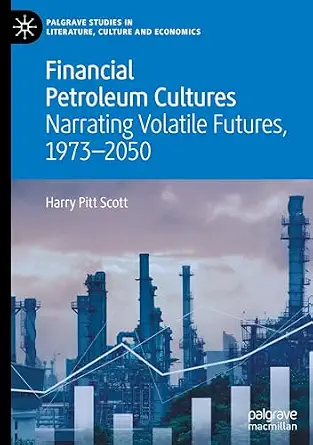
Financial Petroleum Cultures draws upon literature, film, architecture, photography, infrastructure, advertisements, and financial reports to explore how financial narratives shape the future of energy and climate. Arguing that financial representations dominate contemporary petroleum cultures, it focuses on the competing narratives, celebratory and critical, determining how energy is perceived, imagined, and used. Encompassing critiques of ideology and infrastructure, this book offers a new understanding of the political visions enabled and constrained by the financial sector in an increasingly volatile world.
Harry Pitt Scott is a Leverhulme and Lord Kelvin Adam Smith Early Career Research Fellow in the School of Critical Studies at the University of Glasgow, UK.
About the Author
Harry Pitt Scott is a Leverhulme and Lord Kelvin Adam Smith Early Career Research Fellow in the School of Critical Studies at the University of Glasgow, UK.
 Wow! eBook