 Wow! eBook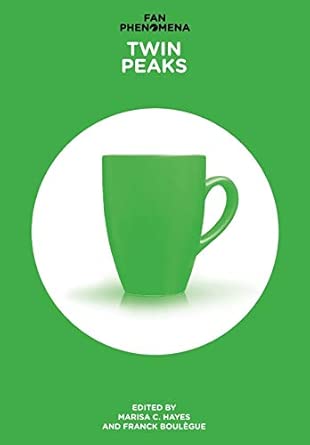
Fan Phenomena – Twin Peaks
Author(s): Marisa C. Hayes (Author), Franck Boulègue (Author)
- Publisher: Intellect
- Publication Date: 28 Jun. 2013
- Language: English
- Print length: 164 pages
- ISBN-10: 1783200243
- ISBN-13: 9781783200245
Book Description
David Lynch and Mark Frost’s television series Twin Peaks debuted in April 1990 and by June of 1991 had been cancelled. Yet the impact of this surreal, unsettling show – ostensibly about the search for homecoming queen Laura Palmer’s killer – is far larger than its short run might indicate. A forerunner of the moody, disjointed, cinematic television shows that are commonplace today, Twin Peaks left a lasting impression, and nowhere is that more clear than in the devotion of its legions of loyal fans.
Fan Phenomena: Twin Peaks is the first book of its kind to revisit Lynch and Frost’s ground-breaking series and explore how the show’s cult status continues to thrive in the digital era. In ten essays, the contributors take a deeper look at Twin Peaks’ rich cast of characters, iconic locations and its profound impact on television programming, as well as the impact of new media and fan culture on the show’s continued relevance. Written by fans for fans, Fan Phenomena: Twin Peaks is an intelligent yet accessible guide to the various aspects of the show and its subsequent film. Featuring commentary from both first-generation and more recent followers, these essays capture the endlessly fascinating universe of Twin Peaks, from Audrey Horne’s keen sense of style to Agent Cooper’s dream psychology. The first non-academic collection that speaks to the show’s fan base rather than a scholarly audience, this book is more approachable than previous Twin Peaks critical studies volumes and features colour images of the series, film and fan media. It will be welcomed by anyone seduced by the strangeness and camp of Lynch’s seminal series.
Editorial Reviews
Review
“Takes those who remember
Twin Peaks back to the town where everyone had something to hide. . . . The editors have brought together a rich collection of ideas and points of view in an easily accessible volume.”– “Australasian Journal of Popular Culture”“That the fan-written essays in
Fan Phenomena: Twin Peaks are so consistently well written may speak to the intellect of the average “Twin Peaks” fan, or it may just speak to the good job editors Marisa C. Hayes and Franck Boulègue did. Or it may just be that these particular fans tend to be scholars and professional writers. . . . A fun read and very heartening evidence of how the series’ influence continues to resound and its fan base continues to swell.”– “Psychobabble”About the Author
Franck Boulègue is a film critic for various research journals and co-editor of Fan Phenomena: Twin Peaks.
Marisa C. Hayes is a Franco-American film scholar specializing in dance films and genre cinema. Her writing has appeared in numerous books and journals.
Excerpt. © Reprinted by permission. All rights reserved.
Fan Phenomena Twin Peaks
By Marisa C. Hayes, Franck Boulègue
Intellect Ltd
Copyright © 2013 Intellect Ltd
All rights reserved.
ISBN: 978-1-78320-024-5
Contents
Introduction MARISA C. HAYES WITH FRANCK BOULÈGUE,
Peaks and Pop Culture SHARA LOREA CLARK,
Fan Appreciation no.1 Bryan Hogue: Co-owner ‘Black Lodge Video’,
Audrey in Five Outfits ANGELA K. BAYOUT,
Embodiment of The Mystery: Performance and Video Art Go Twin Peaks GRY WORRE HALLBERG AND ULf RATHJEN KRING HANSEN,
The Owls Are Not What They Seem: Cultural Artifacts of Twin Peaks ANDREW HOWE,
Fan Appreciation no.2 Pieter Dom, founder and webmaster of WelcometoTwinPeaks.com,
‘Yeah, But the Monkey Says, Judy’: A Critical Approach to Twin Peaks: Fire Walk With Me SCOTT RYAN AND JOSHUA MINTON,
Fan Appreciation no.3 Low Zu Boon: Film Programmer at the National Museum of Singapore,
The Dream Logic of Twin Peaks KELLY BULKELEY,
Twin Peaks and the ‘Disney Princess’ Generation DAVID GRIFFITH,
Bond on Bond: Laura Palmer and Agent Cooper in Twin Peaks DAVID BUSHMAN,
Strange Spaces: Cult Topographies in Twin Peaks FRAN PHEASANT – KElLY,
Gothic Daemon BOB CHRIS MURRAY,
Going Further,
Image Credits,
Editor and Contributor Biographies,
CHAPTER 1
Peaks and Pop Culture
Shara Lorea Clark
->‘Who killed Laura Palmer?’ In 1990, this chilling question drew unsuspecting audiences to ABC to follow quirky FBI Special Agent Dale Cooper in his mission to solve the mysterious murder of a high school homecoming queen. On the night of its premier, 34.6 million viewers tuned in for the feature-length pilot (Season 1 Episode 1), and the macabre image of Laura Palmer’s body found washed ashore, wrapped in plastic, became an instant icon. In a time when more auspicious sitcoms like Cheers (1982–93) and Roseanne (1988–97) topped the prime time charts, virgin audiences were introduced to something different – something way weirder than they were used to.
By way of Twin Peaks, David Lynch and Mark Frost brought a cinematic element of dark intrigue, unease and mystery to the screen that television audiences had not been exposed to. It was that mystery, along with the ominous woods and the somehow off-kilter picture-perfect town that enthralled a slew of fans. The transcendental Red Room scenes with the backwards-talking and dancing dwarf swept viewers off of their couches and into Twin Peaks‘ alternate universe. From there began the journey to a place both wonderful and strange. Fans became fixated on the show’s wondrous world of evolving secrets, questionable owls and ever-curious overacting. Despite being intentionally offbeat, Twin Peaks became a worldwide sensation, ranking among the top-rated TV series of the ’90s. The show’s supernatural undertones, oddball characters and interdimensional dream sequences spawned a dedicated cult following and changed television in a big way. It inspired and shaped its own cult movements, as well as a series of others, that followed in its wake.
Twin Peaks‘ influence on popular culture reveals itself in television shows, movies, songs and other forms of media from the ’90s to now. It saturated the cultural consciousness in such an immense and immediate way that not just television audiences, but also accomplished writers and directors took notice. As people obsessed over finding clues that would lead to Laura Palmer’s killer, Peaks references began appearing in popular network shows. In 1990, before the killer was revealed, an episode of Saturday Night Live featured an unusually long, nine-minute parody sketch of the surreal soap. Kyle MacLachlan hosted the episode and played Agent Cooper in the skit, in which he exaggerated, if not by much, his idiosyncrasies, announcing to his tape recorder, ‘Di-ane … this morning I showered for nine minutes, found seventeen hairs. Three curly, fourteen straight.’ And a Peaks red herring, Leo Johnson, portrayed by Chris Farley in the skit, adamantly confessed to the crime, and showed incriminating photos of himself committing the act, but Cooper just wouldn’t have it. He wanted to look deeper, continue the mystery, as the show itself did, long after the murder was solved.
Another of the first, but perhaps one of the most unusual, shows to reference Twin Peaks was Sesame Street (1969–), a popular children’s television show, which spoofed the series in February 1991 during Peaks‘ second season. In the borderline creepy ‘Monsterpiece Theater: Twin Beaks’ segment, Cookie Monster plays Agent Cookie, an inquisitive creature who carries a tape recorder he refers to as Diane. He questions Twin Beaks residents in the diner, which of course serves ‘darn fine’ pie, and asks the double-beaked birds David Finch, Laura and the Log Bird about how the town got its name. They wouldn’t divulge the secret.
Even the long running animated sitcom The Simpsons (1989–) referenced Twin Peaks on more than one occasion. In the 1995 episode ‘Who Shot Mr. Burns Part II’ (Season 7, Episode 1), Chief Wiggum dreams he is in a red-curtained room with chevron floors. Lisa dances and speaks backwards as she delivers a clue, in the same way Peaks‘ Man from Another Place does in Cooper’s dream. Again, in the 1997 episode ‘Lisa’s Sax’ (Season 9, Episode 3), Homer is seen intently watching an episode of Twin Peaks, in which a giant dances with a white horse in the woods. Both a giant and a white horse played part in Peaks‘ perplexity. Homer reacts in a manner shared with many Peaks‘ viewers by saying, ‘Brilliant! I have absolutely no idea what’s going on.’
Though short-lived, airing its two seasons in just over a year, Twin Peaks essentially redefined the boundaries of network television, and opened the door for many of today’s well-known serial dramas and science fiction TV shows. If not for Twin Peaks blurring the lines of what was too weird or too grotesquely odd, there may have never been shows like Lost (2004–10), Fringe (2008–) or American Horror Story (2011–). And audiences almost certainly never would have seen Chris Carter’s The X-Files (1993–2002), arguably the first and most propitious in this list of series influenced by Peaks. Premiering in 1993, about a year after the release of the film Twin Peaks: Fire Walk With Me (Lynch, 1992), The X-Files followed on the heels of Peaks‘ surprising but fleeting network success.
By some accounts, Peaks‘ untimely demise came at the hands of network executives, who shuffled its time slot and insisted that the writers reveal what Lynch later referred to as the show’s ‘golden egg’. Lynch has said in several interviews that by revealing Laura’s killer – the show’s biggest and most precious mystery – much earlier than planned, they ‘killed the goose’. After the secret was out, the show meandered into muddled subplots, and its ratings declined. Following this experiment with Peaks, major networks had a newfound openness to envelope-pushing, genre-based series, and a better understanding of how to make them work.
Perhaps as a better effort to keep audiences coming back, much of The X-Files‘ story and background was presented via stand-alone ‘monster of the week’ episodes, but there were a few ‘golden eggs’ that were maintained throughout the series’ nine seasons: the mystery of Agent Mulder’s younger sister’s abduction, for example, and the identity of the Smoking Man were part of the show’s overarching, continuous mystery. Where Peaks ultimately became something of a test series, X-Files was able to easily and successfully follow suit – fearlessly delving into paranormal territory while exploring conspiracy theories and government mistrust, and aiming to prove extraterrestrial existence. Post-Peaks audiences were ready for it. By leaving us with some of the most disturbing images TV viewers had seen to date, Lynch created a place for this type of bizarre and unusual programming.
Interestingly, The X-Files cast also included several Twin Peaks mainstays. Most notably, David Duchovny, who played a cross-dressing FBI agent in Peaks, became the lead male (and one half of the main duo) in The X-Files, playing FBI Special Agent Fox Mulder. Agent Mulder, like Peaks‘ Cooper, exhibited an unconventional methodology and showed a deep-rooted respect for and awe of the paranormal. Don Davis, who portrayed Peaks‘ Major Briggs, appeared in the The X-Files as Captain William Scully, Special Agent Dana Scully’s father. Other crossover actors included Richard Beymer (Peaks‘ Benjamin Horne), Kenneth Welsh (Windom Earle), Michael J. Anderson (The Man from Another Place), Michael Horse (Deputy Hawk), Jan D’Arcy (Sylvia Horne) and Frances Bay (Mrs. Tremond).
As Peaks‘ memorable one-liners – ‘The owls are not what they seem’ and ‘Who killed Laura Palmer?’ – were on the lips of anyone and everyone watching TV in the early ’90s, Files‘ slogans became as omnipresent. ‘The Truth is Out There’, ‘Trust No One’, and ‘I Want to Believe’ became benchmarks of their time. The show went on to gain a major cult following of its own, and is known as another defining series of the ’90s.
The X-Files isn’t the only show that has Twin Peaks to thank for setting new standards for what was previously banally formulaic television. Fast-forward to 2004, when audiences were introduced to Lost, a strange and enigmatic show from creators Jeffrey Lieber, J.J. Abrams and Damon Lindelof. In an interview with CHUD.com’s Devin Faraci, Lindelof said he and his father watched Twin Peaks every week when it originally aired: ‘He’d tape the show on his VCR, and we’d watch the episode again right after it aired in our quest to pull every last clue out of the show,’ Lindelof said. ‘The idea of a TV show being a mystery and a game that spawned hundreds of theories obviously was a major precedent – that’s a fancy way of saying we ripped it off – for Lost.‘
Lindelof’s admission aside, Peaks‘ influences are more than obvious in Lost, which in many ways was something of a next generation Twin Peaks. Lost left viewers on the edge of their seats, anxiously awaiting clues and answers. What’s up with that smoke monster? What happens if they don’t push the button? These and other questions had fans wildly obsessing over the island’s mystique. In the bigger picture, Lost played heavily on duality, much like Twin Peaks. The juxtaposition of black-and-white is a recurring motif, representing moral and spiritual dualism in the show’s characters and their various conflicts. The discordance between the passengers of Oceanic Airlines Flight 815 and the island’s seemingly malicious inhabitants known as ‘The Others’ reiterates the show’s dualistic nature.
With its puzzling subplots and clues that many times led nowhere, Lost embraced what Twin Peaks had set out to do by presenting viewers with a slowly unraveling mystery in a strange setting. It presented a hard code to crack, and, like Peaks, left viewers with a somewhat open-ended conclusion that left plenty of room for theories and unending discussion. Lost created a hubbub bigger than just about any other show in the 2000s, and has been praised by many critics as one of the best TV serials of all time.
Lost co-creator Abrams, who has had a hand in creating a plethora of sci-fi and paranormal TV shows and movies, further proves the influence of Twin Peaks on his work in other projects. The newer FOX sci-fi drama Fringe, for example, which is very much like The X-Files, also delves into parallel universes where the characters’ alternate selves reside. Fringe writers have made notable references to Twin Peaks, several in the episode ‘Northwest Passage’ (Season 2, Episode 21), which shares a title with the Twin Peaks pilot, and was also the originally-intended name of the series itself. In the episode, Walter is seen wearing a pair of red and blue-lensed glasses that allow him to see his patient’s aura. He mentions that his friend Dr. Jacoby from Washington state invented the spectacles. They are the same style of coloured-lens eyeglasses that Peaks‘ eccentric psychiatrist Dr. Lawrence Jacoby famously wore.
In 2010, the year of Twin Peaks‘ 20th anniversary, several tributes were made in recognition of this milestone. A nod was given by voice actor and rapper MC Chris in the form of a special April Fool’s Day song uploaded to his website. The eponymous song starts:
Stack up the donuts; pack up the pies.
Put on the trench coat; rack up the lies […]
Gotta crack a case in a place called Peaks;
Where the lights all blink and your outlook’s bleak.
Got a lotta caffeine;
Interrogating teens ’cause the homecoming queen just rolled up on the beach,
Wrapped in plastic, white as a sheet.
An accompanying fan video made from Twin Peaks clips has had nearly 150,000 views on YouTube.
Another well-done anniversary tribute was a Twin Peaks‘ reunion episode of the detective comedy drama, Psych (2006–). Wittingly titled ‘Dual Spires’ (Season 5, Episode 12), the episode paid homage with even the smallest details. The show’s theme music, rerecorded by Peaks crooner Julee Cruise, follows the opening scene, where we see private investigator Shawn sitting with his laptop pondering an article that mentioned the invention of silent window shades. The camera pans across a chocolate bunny on his desk as his partner Gus says, ‘Since when is the opening and closing of shades so disruptive that it needs to be alleviated?’ Within those first few seconds, they referenced Twin Peaks‘ Nadine, who prided herself on inventing silent drape runners. The bunny subtly poked at an esoteric Peaks‘ quote from Agent Cooper: ‘Diane, I am holding in my hands a small box of chocolate bunnies.’
A handful of actors who played main characters in Twin Peaks‘ guest-starred in the whodunnit episode, in which a peculiar e-mail led the duo to the small town of Dual Spires and its annual cinnamon festival. They inadvertently get caught up in an investigation of the murder of high-schooler Paula Merral – an anagram of Laura Palmer. Among the Peaks actors to appear were Sheryl Lee (Peaks‘ Laura Palmer), Sherilyn Fenn (Audrey Horne), Dana Ashbrook (Bobby Briggs), Ray Wise (Leland Palmer), Lenny Von Dohlen (Harold Smith), Robyn Lively (Lana Milford) and Catherine E. Coulson (the Log Lady). Like in Peaks, the victim was found shoreside wrapped in plastic, and the resulting investigation uncovered long-held secrets and sabotage. In the episode’s final scene, patrons of the town’s Sawmill Diner are seen dancing to sombre, swaying music and behaving strangely.
In 2011, AMC unveiled Veena Sud’s The Killing, a murder mystery with an eerily similar plot line to Peaks. The first season’s DVD cover art shows a close-up image of the teenage victim with the words ‘Who killed Rosie Larsen?’ scrawled over her face. The crime drama explores the darkest pits of human emotion, showing Rosie’s parents’ intense reactions after identifying their daughter’s body in the morgue. The show’s representation of the grieving process in such a traumatic situation is reminiscent of Leland and Sarah Palmer’s heart-wrenching outbursts upon hearing the news of Laura’s death in Twin Peaks. Though The Killing has shown no ties to the paranormal, its second season is set to uncover family secrets and conspiracies as Peaks did. And so the list of shows influenced by Twin Peaks grows.
Twin Peaks not only influenced what we see on our screens, but also inspired a continuously growing fanbase to create their own media and tributes. Super fans of the show continue to memorialize it by hosting viewing parties, art exhibits and fan conventions. Perhaps the most established of these is the fan-organized ‘Twin Peaks Fest’, held annually, near filming locations in North Bend and Snoqualmie Valley, Washington. Since its inception in 1993, the weekend-long event has drawn hundreds of diehard fans, old and new, yearly to those same ominous woods among the Douglas firs that Agent Cooper so loved.
Early ticket-buyers can snag a pass that includes a bus tour with stops at popular Peaks‘ locales like the Double R Diner (now Twede’s Cafe, still serving that famous cherry pie), the Roadhouse, and the rocky shore where Laura’s body was found. The fest’s agenda also includes Twin Peaks costume and trivia contests, Tibetan rock-throwing and cherry stem-tying contests, movie night, and a bounty of doughnuts and damn fine coffee. The main event is a celebrity dinner and Q&A, and the guest list over the years has included Sherilyn Fenn, Sheryl Lee, Ray Wise, Michael J. Anderson, Catherine E. Coulson, and many others. Peaks freaks are able to gain insight into some of their favourite scenes and hear stories about the actors’ filming experiences. For fans, it is not only a way to get closer to their favourite otherworldly show, but also to share their love for it with others who feel the same way. Many attendees have come to treat it as a sort of family reunion and make the trek annually.
(Continues…)Excerpted from Fan Phenomena Twin Peaks by Marisa C. Hayes, Franck Boulègue. Copyright © 2013 Intellect Ltd. Excerpted by permission of Intellect Ltd.
All rights reserved. No part of this excerpt may be reproduced or reprinted without permission in writing from the publisher.
Excerpts are provided by Dial-A-Book Inc. solely for the personal use of visitors to this web site.


