 Wow! eBook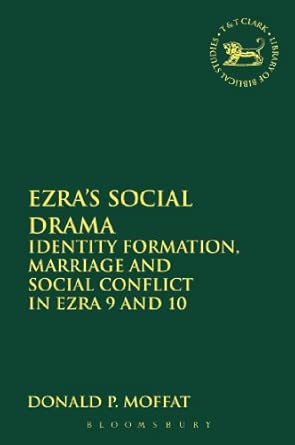
Ezra's Social Drama: Identity Formation, Marriage and Social Conflict in Ezra 9 and 10: 579
Author(s): Donald P. Moffat (Author)
- Publisher: Bloomsbury T&T Clark
- Publication Date: 25 April 2013
- Language: English
- Print length: 208 pages
- ISBN-10: 056760912X
- ISBN-13: 9780567609120
Book Description
Moffat aims to provide further insight into the mixed marriage narrative by exposing the social and cultural factors on which it is based. He also identifies historical traces in the narrative that can contribute to a historical reconstruction of the post-exilic era. The socio-cultural analysis highlights previously unobserved aspects of the narrative as it understands that the narrative reflects a context in which identity formation issues were prominent in Persian Yehud.
Moffat argues that the rituals of mourning and penitential prayer are important acts that shaped the mixed marriage controversy. The label ‘foreign women’ is identified as a symbol which carried considerable freight and connected the mixed marriages with wider social discourse on identity. Further, the Exodus traditions are shown to be significant for the conceptual foundations underlying the narrative and the society that produced it. The analysis also gives reason to understand Ezra as the pivotal character in narrative plot. This not only affects how the narrative is understood but has implications for historical reconstruction that utilises this narrative.
Editorial Reviews
About the Author
Don Moffat holds a Ph.D. from the University of OTago and is a former regional Dean of Studies for the Bible College of New Zealand (now Laidlaw College). He currently divides his time between writing and teaching roles for various theological institutions.


