 Wow! eBook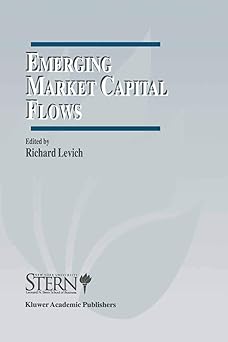
Emerging Market Capital Flows: Proceedings of a Conference held at the Stern School of Business, New York University on May 23–24, 1996 (The New York … Series on Financial Markets and Institutions)
by: Richard M. Levich (Editor)
Publisher: Springer
Edition: 1998th
Publication Date: 2012-10-11
Language: English
Print Length: 488 pages
ISBN-10: 1461378419
ISBN-13: 9781461378419
Book Description
In a little over one decade, the spread of market-oriented policies has turned the once so-called lesser developed countries into emerging markets. Many forces have been responsible for the tremendous growth in emerging markets. Trends toward market-oriented policies that permit private ownership of economic activities, such as public utilities and telecommunications, are part of the explanation. Corporate restructuring, following the debt crisis of the early 1980’s has permitted many emerging market companies to gain international competitiveness. And an essential condition, a basic sea-change in economic policy, has opened up many emerging markets to international investors. This growth in emerging markets has been accompanied by volatility in individual markets, and a sector-wide shock after the meltdown in the Mexican Bolsa and Mexican peso, resulting in heated debate over the nature of these markets. Emerging market capital flows continue to be the subject of intense discussion around the world among investors, academics, and policymakers. Emerging Market Capital Flows examines the issues of emerging market capital flows from several distinct perspectives, addressing a number of related questions about emerging markets.
Editorial Reviews
In a little over one decade, the spread of market-oriented policies has turned the once so-called lesser developed countries into emerging markets. Many forces have been responsible for the tremendous growth in emerging markets. Trends toward market-oriented policies that permit private ownership of economic activities, such as public utilities and telecommunications, are part of the explanation. Corporate restructuring, following the debt crisis of the early 1980’s has permitted many emerging market companies to gain international competitiveness. And an essential condition, a basic sea-change in economic policy, has opened up many emerging markets to international investors. This growth in emerging markets has been accompanied by volatility in individual markets, and a sector-wide shock after the meltdown in the Mexican Bolsa and Mexican peso, resulting in heated debate over the nature of these markets. Emerging market capital flows continue to be the subject of intense discussion around the world among investors, academics, and policymakers. Emerging Market Capital Flows examines the issues of emerging market capital flows from several distinct perspectives, addressing a number of related questions about emerging markets.


