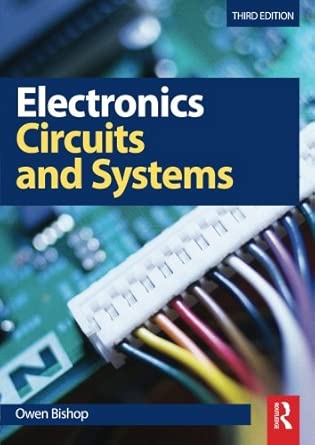
The material in Electronics – Circuits and Systems 3rd Edition is a truly up-to-date textbook, with coverage carefully matched to the electronics units of the 2007 BTEC National Engineering and the latest AS and A Level specifications in Electronics from AQA, OCR and WJEC. The material has been organized with a logical learning progression, making it ideal for a wide range of pre-degree courses in electronics. The approach is student-centred and includes: numerous examples and activities; web research topics; Self Test features, highlighted key facts, formulae and definitions. Each chapter ends with a set of problems, including exam-style questions and multiple-choice questions.
The book is now also supported by a companion website featuring extensive support for students and lecturers, including answers to the questions in the book, interactive exercises, extra math support and selected illustrations from the book.
Editorial Reviews
Review
“This electronics book by Bishop is a super introduction to the topic. If you’re studying-even at degree level-and doing practical projects, this will make sure you do not hit the buffers or run out of steam by giving plenty of realistic ideas for those vital designs.” Amazon.co.uk reader review of the first edition
From the Back Cover
A complete introductory textbook assuming only a basic mathematics and science background
* Highly accessible and visual learning style which encourages independent and practical work * Companion website with interactive learning material * Fully up to date with the 2007 BTEC National and the latest A Level specifications
The coverage of
Electronics Circuits and Systems has been carefully matched to the electronics units of the 2007 BTEC National Engineering and the latest AS and A Level specifications in Electronics from AQA, OCR and WJEC. However, rather than following the structure of a particular syllabus, the material is organised with a logical learning progression, making it ideal for a wide range of vocational, pre-degree and introductory undergraduate courses in electronics.
The text is presented in a proven and engaging way. ‘Self Test’ features, multiple-choice and end of chapter revision questions help students check their understanding. Activities are suitable for practicals, homework and other assignments. Key facts, formulae and definitions are highlighted to aid revision, and theory is backed up by numerous examples throughout the book. New in this edition are ‘On the Web’ features to help familiarise the student with the use of the Web as a source of technical information.
The third edition includes five new chapters on electrical and magnetic fields, diodes, oscillators, integrated circuits, and industrial process control systems, and several other chapters have been expanded to reflect the increasing importance of digital electronics and microcontroller systems.
A
free companion website is available at http://books.elsevier.com/companions/9780750684989 and features: * Animated diagrams showing electronic circuits in action * Calculators for electronic formulae * Interactive worksheets and multiple-choice tests with help prompts and answers * Answers to the numeric end of chapter revision and to all multiple choice questions in the book * Extra maths support * PowerPoint presentation of a selection of illustrations from the textbook, for use in presentations and handouts
About the Author
Author of over 70 books, mostly electronic and many in the field of science education. Contributor to numerous electronic magazines such as Everyday Practical Electronics, Elektor Electronics, Electronics Australia and Electronics Today International. Former Science Education Advisor in developing countries as staff member of the British Council and as a part of the UN Educational and Scientific Organisation.
 Wow! eBook