 Wow! eBook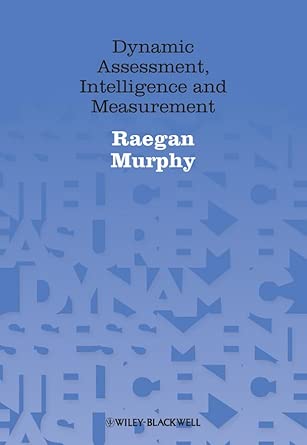
Dynamic Assessment, Intelligence and Measurement
Author(s): Raegan Murphy (Author)
- Publisher: Wiley-Blackwell
- Publication Date: 17 Dec. 2010
- Edition: 1st
- Language: English
- Print length: 292 pages
- ISBN-10: 0470683082
- ISBN-13: 9780470683088
Book Description
- Explores the relationship that dynamic assessment shares with intelligence and measurement
- Outlines a new approach to the assessment of human intelligence while remaining rooted within the scientific realm of psychology
- Fuses philosophy, science methodology, and meta-theory to offer an innovative framework for the assessment of models and theories, dynamic assessment, intelligence, measurement theory, and statistical significance testing
- Provides the theoretical underpinnings that can lead to a new way forward for the ‘movement’ of dynamic assessment
Editorial Reviews
Review
Review
–Dr. Carol S. Lidz, Philadelphia, USA
Raegan Murphy delivers a masterful, wide-ranging analysis of philosophical, mathematical and scientific issues underlying dynamic assessment and intelligence. Seeking autonomy from ill-grounded ideas along the passage from philosophy to practice, Murphy illustrates how unsound presuppositions at one step often have emerged as unquestioned assumptions in others that follow upon it. Drawing on her multipart analysis, she highlights the choice to develop the field of dynamic assessment within the area created by the assessment of intelligence or within a new area created free from the fetters of ideas and conventions that may be unsuited to this field’s purposes and goals. Aided by her pithy pen, Murphy’s incisive scholarship identifies both warranted and unwarranted criticisms of dynamic assessment to enable a troubled, but promising field to take a big step to come of age.
–Mogens R. Jensen, Director, International Center for Mediated Learning, USA
From the Inside Flap
After introducing readers to the interconnected domains of dynamic assessment, intelligence, and measurement, research psychologist and intelligence expert Raegan Murphy probes deeply into the philosophical underpinnings of the measurement models currently utilized in psychological assessment and practice. Then, with a seamless fusion of philosophy, science methodology, and meta-theory, she proceeds to construct a novel framework for the assessment of models and theories, dynamic assessment, intelligence, measurement theory and statistical significance testing. In her concluding chapter, Murphy reveals how the simultaneous consideration of the relationships between dynamic assessment, intelligence, and measurement can offer innovative insights into the future development of psycho-educational assessment.
Dynamic Assessment, Intelligence and Measurement signals a bold new direction in shaping our understanding of the most effective approaches to the development of human potential.
From the Back Cover
After introducing readers to the interconnected domains of dynamic assessment, intelligence, and measurement, research psychologist and intelligence expert Raegan Murphy probes deeply into the philosophical underpinnings of the measurement models currently utilized in psychological assessment and practice. Then, with a seamless fusion of philosophy, science methodology, and meta-theory, she proceeds to construct a novel framework for the assessment of models and theories, dynamic assessment, intelligence, measurement theory and statistical significance testing. In her concluding chapter, Murphy reveals how the simultaneous consideration of the relationships between dynamic assessment, intelligence, and measurement can offer innovative insights into the future development of psycho-educational assessment.
Dynamic Assessment, Intelligence and Measurement signals a bold new direction in shaping our understanding of the most effective approaches to the development of human potential.
About the Author
Excerpt. © Reprinted by permission. All rights reserved.
Dynamic Assessment, Intelligence and Measurement
By Raegan Murphy
John Wiley & Sons
Copyright © 2010 John Wiley & Sons, Ltd
All right reserved.
ISBN: 978-0-470-68308-8
Chapter One
Introducing Dynamic Assessment and Intelligence
Introduction
This book is written for advanced students of assessment and assumes an already existing postgraduate knowledge base in the domains of assessment, intelligence and measurement, as well as a working familiarity with dynamic assessment. Readers who are not well versed in these areas may find some sections challenging. A comprehensive reference list will guide the reader to both less and more advanced texts. This book is about the relationship that dynamic assessment has with intelligence and measurement. All three areas are assessed simultaneously. This is not a book about dynamic assessment only or about intelligence only, nor is it a book solely about measurement theory. It is a treatise which seeks to pave a way for the ‘movement’ of dynamic assessment in order to allow for gradual development of this unique approach to assessment of potential while remaining firmly embedded within a scientific approach to the study of psychology. You will find information on dynamic assessment, intelligence and measurement theory, but these sections will always be informed by concerns of the necessary intertwinement of all three areas.
The arguments put forward seek to enlighten the future development of dynamic assessment as a novel approach in the world of psycho-educational assessment. There is much that can be said about dynamic assessment and its lack of momentum in an increasingly objective scientific world, but were it not for its intuitive appeal and laudable investment in people, no such treatise would have been considered. A cautionary note needs to be added: dynamic assessment, intelligence and measurement are not concepts that can be considered interchangeable in terms of being at the same conceptual level. They are areas of concern which work together and not in isolation. They are not competitive areas within psychology. Dynamic assessment is an approach to understanding and conceiving an individual in the assessment process. Intelligence is a field dealing with matters concerning various descriptors of what is considered intelligent and measurement theory offers tools for dynamic assessors and intelligence researchers. It so happens that dynamic assessors will need to assess for intelligence, but this is not the sole concern of the approach. Historically, assessing for intelligence has usually meant that a mode of static assessment as a tool has been deployed. Dynamic assessment is a tool as well as an approach and is process-based. Measurement theory assists dynamic assessment theory in terms of allowing the fluid concept of potential to be measured as one would normally expect a static-based concept such as intelligence to be measured.
Chapter Guide
This chapter introduces the idea behind assessment administered in a dynamic manner and how this approach differs from mainstream assessment. It surveys the fundamentals of this approach in psychological assessment and presents an historical perspective on its development throughout the twentieth century. The reader will also find an overview of the field of intelligence. Thanks to the plethora of many exceptional books on intelligence, this chapter does not seek to be comprehensive in its coverage but, unlike other intelligence texts, integrates the ideas of dynamic assessment with core issues within the domain of intelligence.
Contextualization
Dynamic assessment is a manner of assessing individuals in a fluid, process-oriented and flexible way and has much to offer the field of intellectual assessment due to its unique stance on measurement. The origins of dynamic assessment are in areas of research in which practitioners were originally given mandates to assess prospective learners within specific cultural contexts. Concepts, ideals and notions associated with this type of assessment were often translated into quantifiable measurements in order to satisfy the reigning paradigm of testing. More often than not, dynamic assessment ideals did not filter through to later versions and modifications of tests, and the goal of many early intelligence tests was to categorize individuals based on their performance within the testing situation. Partly owing to industrialization and expansion, testing groups of individuals was deemed more expedient than individual assessment, thus allowing more people to be tested within a shorter timespan.
Unfair discrimination and the biased use of many intelligence tests gradually led to dissatisfaction with these static and product-bound instruments and, in an attempt to find a suitable form of assessment, dynamic assessment has offered partial solutions to the problem-riddled field of intelligence assessment. The origins of dynamic assessment are widespread geographically, disparate in terms of initial reasons for its use and culturally diverse in the contexts within which it works. How have the origin and development of dynamic assessment compared to mainstream intelligence research in terms of theoretical contribution, practical enhancement of current tests, reduction of bias and generalizability? Does dynamic assessment lack a coherent and sound theoretical base? As with most theories in the realm of science as it is practised in the social and natural milieus, tenuous foundations and fuzzy concepts hamper the progress of ideas and theories. What are the theory and framework behind dynamic assessment? Ironically, one aspect of dynamic assessment research for which consensus has been reached is that there is as yet no single framework in which this form of assessment can be adequately placed.
Diverse as the field of dynamic assessment may appear at first glance, it may be possible to link various trends and researchers within this field by investigating the historical influences, basic premises on which theories are based and contemporaneous personalities within intelligence assessment. In attempting to link, compare and integrate these various trends a profounder understanding of what dynamic assessment is, how it evolved and the nature of its future course can be sought. Seeking coherence and consistency in a field as disparate as dynamic assessment may well prove fruitful in its future endeavours in the intelligence arena and its subsequent acceptance within larger academic circles in psychology. In order to advance within the field of dynamic assessment basic issues have to be readdressed. The very notion of what it means to measure is confounded by institutionalized acceptance of what is considered measurable and what is not. Of course, it is not only dynamic assessment that labours against these notions, but also traditionally accepted forms of assessment which, without critical thought for the philosophy of measurement, have taken ever greater strides in theory and model development without first addressing basic issues. If fundamental and core issues can be addressed, then perhaps a sounder foothold can be established in which all forms of assessment can take root, in particular, dynamic assessment. This book attempts to disentangle current preoccupations with certain issues in the field and to objectify, explore and understand more fully why it is that this field is experiencing problems of greater acceptance within the broader assessment profession.
The author has leaned very heavily on the concepts, ideas and models used by a Danish researcher, K. B. Madsen, who has been influenced by a host of Scandinavian researchers and who, among others, co-founded the fundamentals of a theoretically attuned psychology (Baker, Hyland, Van Rappard & Staats, 1985). He was most notably influenced by Sigmund Koch who pioneered comparative studies of scientific theories within psychology (Koch, 1959; Madsen, 1987a). It seems almost fitting that the foundations on which this book rests emanate from geographically and philosophically disparate areas, much akin to the very disparities which make up the history and progress of dynamic assessment. Mainstream psychological theory and practice offers much by way of origins and development, but it is noteworthy that Western ways of practising what is considered a psychology has helped fuel the coalescence of non-Western practices. Much in the same vein as Joseph Royce (1973; 1987), perhaps it is more felicitous to build ‘mini-theories’ or micro-theories (Brand, 1998), which represents a tentative start to a longer process. Madsen’s methodology and choice of locating theory within the grander culmination of multitudinous strata offer a guide to systematizing the outpouring of data and methods.
History of Dynamic Assessment
Lev Vygotsky
The history of dynamic assessment has disparate origins depending on how it is viewed, but can be said to have a long past and short history (Haywood & Tzuriel, 1992; Lidz & Elliott, 2000b; Wiedl, 2002). Some laud Vygotsky as the founding father due to his unique concept of the zone of proximal development (ZPD) within socio-cultural theory (Elliott, 2003; Hamers, Hessels & Pennings, 1996; Hegarty, 1988), which states that cognitive performance, when aid is provided, will result in the best measure of ability (Hamers & Sijtsma, 1993; Meijer, 1993; Shamir & Tzuriel, 2002), thus leading to the learning test (Guthke, 1982). Reality as such is never met face to face, but is engaged with via tools of mediation (Netchine-Grynberg, 1995). Depending on the level of support a child receives on a task, different outcomes can be expected; performance at the functional level is expected with minimal or no support as opposed to optimal performance with support (Suizzo, 2000) and clearly distinguishes between ‘performance’ and ‘competence’ (Gelman, 2000). His approach was later expanded by other Soviet educationalists and formulated more extensively regarding its educational implications (Haenen, 2000).
Alfred Binet
Others view Alfred Binet as the originator due to his notion of investigating ability during a test and his idea of a continuously developing latent trait. Binet understood correct responses as indicative of ability, whereas Jean Piaget was interested in errors. This was a novel notion at the time but is routinely accepted within current dynamic assessment today; however, Piaget was not really concerned with remediation (Anastasi, 1998; Chalmers & McGonigle, 2000; Lidz & Thomas, 1987; Sternberg, 1997a; Styles, 1999; Ukrainetz, Harpell, Walsh & Coyle, 2000). He also offered interesting ideas on remediation but due to its generality the idea receded into the background (Brown, Campione, Webber & McGilly, 1993).
Reuven Feuerstein
Others stake a claim for Reuven Feuerstein as the founding figure (Feuerstein is sometimes also credited with Vygotsky as equal co-contributors to the field) (Haywood & Tzuriel, 1992). Feuerstein also emphasized what individuals did incorrectly in an attempt to come to a better understanding of their functioning and did so within a mediated learning experiential environment (Bchel & Scharnhorst, 1993; Shamir & Tzuriel, 2002). Feuerstein may be cited as the founding figure due to the development of his test battery within this domain (Skuy, 1989) and his published and widely recognized work on the subject (Lidz, 1992b). It is due largely to Feuerstein and his followers that dynamic assessment has flourished, especially its gradual development in the West (Sternberg & Grigorenko, 2002). His emphasis on a bio-ecological model of human functioning emphasizes distal and proximal factors and thus takes cognizance of indirectly impinging variables, such as genetic heritage and early childhood experiences as well as cultural and socio-economic factors in the developing child.
Ceci’s Bio-Ecological Model
The above models are in line with developmental theories of intelligence such as evidenced by Ceci’s bioecological theory (Ceci & Bruck,1994; Ceci,Rosenblum, De Bruyn & Lee, 1997; Lohman, 2005; Miller, 1997). Some of the early literature dating from the 1920s and regarding educability and pedagogy in general is quite prescient in its treatment of measuring the learning process (Brown, Campione, Webber & McGilly, 1993). Although not making up the majority of the work, a fair section of the material is pleasingly modern in its outlook, which leads one to wonder why some ideas have taken so long to gain a stronghold within mainstream pedagogy, education and assessment. DeWeerdt (1927), for instance, begins her article with a statement echoing sentiments similar to the ones heard today:’the whole scheme of formal education is based upon the fundamental concept of improvability‘ (p. 547; emphasis added), and goes on to state: ‘the educator has always been interested in this capacity of the individual and has measured it in a more or less direct way through class achievement … we have relatively little material on the learning or improvability of children under classroom conditions’ (p. 547; emphasis added). Socio-economic factors as well as cultural mediatory factors and their influences are felt as early as the third grade in school (Portes & Vadeboncoeur, 2003).
It would make sense to intervene as early as possible even if only from a neuronal development point of view as synapses in the frontal and occipital cortex areas, for instance, undergo growth until the age of 20 (Neville, 1994). This is in addition to the fact that remediation in general becomes successively more difficult as age increases (Humphreys, 1988), though it is not necessarily impossible. Intellective factors are only a part of the spectrum of aspects influencing development, and mediated learning experience places cognitive, emotional and cultural dimensions on a par with intellective factors in the model (Skuy, 2002). Bio-ecological theory supports this as it has been shown that environmental influence has differential effectual outcomes on heritability (h), where h represents populations and not individuals (Ceci & Bruck, 1994 ; Conway, 2005 ; Gordon & Lemons, 1997 ), in particular the degree of phenotypical (observed) differences within a population–that is, results from genetic differences within the population (Grigorenko, 2004 ). ‘ Heritability is the ratio of genetic variation to total variation in an attribute within a population’ (Sternberg, Grigorenko & Kidd, 2005 , p. 53; emphasis in original) and explains percentage variation accounted for, not the construct attested to. Feuerstein’s emphasis on the modifiability of cognitive processes can be traced back to the time he was studying under Piaget, whose models of child cognition are synonymous with the developmental tradition, but he later left Piaget to study under André Rey (Burgess, 2000).
Various Strands of Origin
Together with mediated learning experience in which the environmental challenges are filtered and attenuated for the child and which also outweigh the distal factors in the strength of its infl uence, the governing model of human development is all-encompassing and indeed very modern for the time in which it was being proffered as a viable alternative to mainstream testing (Kozulin, 2002a). Vygotsky’s socio-cultural approach and Feuerstein’s mediated learning approach both reject the dichotomous appraisal of cognition as a naturally occurring phenomenon and learning or instruction as a cultural tool. Vygotsky viewed learning, culture and development as inseparable (Mastergeorge, 2001) as any instructional interaction reflects a social interaction (Perret-Clermont & Bell, 1987). Human beings, unlike other species, interact with intentional agents, engage in cultural learning from as early as nine months and acquire the linguistic and other symbols necessary for communication within their cultural grouping (Tomasello, 2001). Culture and development integrate seamlessly within the learning and processing situation (Kozulin, 2002b). However, Miller (1997) warns that although cultural aspects of psychometric intelligence often result in revisiting specific theories of intelligence, it is not always the case that the nature of intelligence itself is revisited. Cognition is framed within culture as ‘cultural ontogeny affects biology in a very direct way’ (Feuerstein, Feuerstein, Falik & Rand, 2002, p. 73), although cogent arguments are made for other sides to the debate of where and how intelligence arises. Culture cannot account for measurable variables and so there is no way of tracing their effects within a causal model (Hunt, 1997).
(Continues…)
Excerpted from Dynamic Assessment, Intelligence and Measurementby Raegan Murphy Copyright © 2010 by John Wiley & Sons, Ltd. Excerpted by permission of John Wiley & Sons. All rights reserved. No part of this excerpt may be reproduced or reprinted without permission in writing from the publisher.
Excerpts are provided by Dial-A-Book Inc. solely for the personal use of visitors to this web site.



