Wow! eBook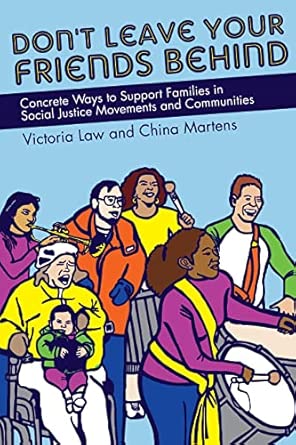
Don't Leave Your Friends Behind: Concrete Ways to Support Families in Social Justice Movements and Communities
Author(s): Victoria Law (Author)
- Publisher: PM PRESS
- Publication Date: 13 Oct. 2012
- Edition: Illustrated
- Language: English
- Print length: 256 pages
- ISBN-10: 160486396X
- ISBN-13: 9781604863963
Book Description
Editorial Reviews
Review
“This book is mind-blowing, brilliant, and urgently needed! It is full of useful models and strategies for creating resistance that breaks down barriers to participation for children and people caring for children, and integrates deeply transformative commitments to building radically different activist culture and practice. This is a must-read for anyone trying to build projects based in collective action.”
–Dean Spade, author of Normal Life: Administrative Violence, Critical Trans Politics and the Limits of Law
“Don’t Leave Your Friends Behind is an essential resource for the interdependence revolution in progress. As a queer, chronically ill woman of color who loves and needs the parents and kids in my communities, I am hungry for these on the ground stories of how parents, allies, comrades, fam and friends are rewriting the world by refusing to hold mamas, papis and kids anywhere but at the center of our movements and communities, where we’re supposed to be.”
–Leah Lakshmi Piepzna-Samarasinha, co-editor, The Revolution Starts at Home: Confronting Intimate Violence in Activist Communities
“Activist mothers Law and Martens propose that radical movements interested in winning must welcome parents and their children–the youngest rabble rousers. They have created a practical guide for us all to do just that, but with zero guilt trips and moralizing. Don’t Leave Your Friends Behind puts teeth into the slogan, Another World is Possible by showing us what a healthy left might look like.”
–James Tracy, co-author of Hillbilly Nationalists, Urban Race Rebels, and Black Power: Community Organizing in Radical Times
“A powerful mixture of self-help and literature, putting ‘family values’ in a new light and on the agenda of social justice movements. And it’s not just self-help for radicals who are parents, but food for everyone who seeks to become their better, more compassionate selves.”
–Roxanne Dunbar-Ortiz, activist, teacher, author of Outlaw Woman: A Memoir of the War Years: 1960-1975
About the Author
Victoria Law is a mother, photographer, and writer. She is the author of Resistance Behind Bars: The Struggles of Incarcerated Women, which won the 2009 PASS (Prevention for a Safer Society) Award and earned her the 2011 Brooklyn College Young Alumna Award.
Widely known as the grandma of the mama zine scene and a pioneer in the genre of radical parenting writing, China Martens raised her daughter as a single mother on welfare and working poor while continuing to put out The Future Generation, the longest-running parenting zine in the history of the Western world (1990 to the present). Her daughter is nearly 24 years old and her zine has been anthologized into the book The Future Generation: The Zine-book for Subculture Parents, Kids, Friends and Others (Atomic Book Company 2007).