Wow! eBook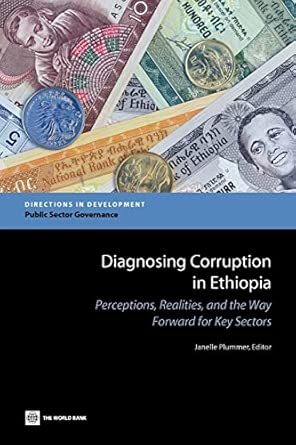
Diagnosing Corruption in Ethiopia: Perceptions, Realities, and the Way Forward for Key Sectors (Directions in Development)
Author(s): Janelle Plummer
- Publisher: World Bank Publications
- Publication Date: 15 Jun. 2012
- Edition: Illustrated
- Language: English
- Print length: 410 pages
- ISBN-10: 0821395319
- ISBN-13: 9780821395318
Book Description
For decades, corruption in Ethiopia has only been discussed at the margins. Perhaps because many have not experienced corruption as a significant constraint to their lives and businesses, or perhaps because a culture of circumspection has dampened open dialogue, Ethiopia has neither seen the information flows nor the debate on corruption that most other countries have seen in recent years. This study attempts to fill this information gap. Conducted by the World Bank (with financial support from the UK, the Netherlands and Canada) in conjunction with the Federal Ethics and Anti-Corruption Commission of Ethiopia (FEACC), the study is an independent overview of corruption. It attempts to map the nature of corruption in eight sectors in the country. The studies focuses on three key objectives: (i) to develop sector frameworks that enable mapping of the potential areas of corruption on a sector-by-sector basis; (ii) to map the different forms, and types of corrupt practices in the selected sectors; and (iii) to consider the higher risk areas and identify appropriate sector or cross cutting responses for Government and other stakeholders. The sectors covered are health, education, water, justice, construction, land, telecommunications and mining.