Wow! eBook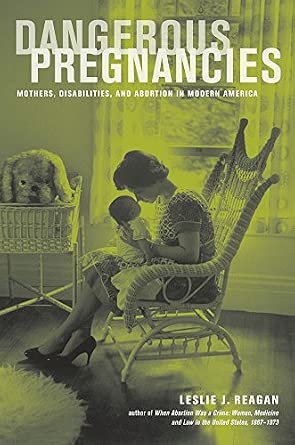
Dangerous Pregnancies: Mothers, Disabilities, and Abortion in Modern America
Author(s): Leslie J Reagan (Author)
- Publisher: University of California Press
- Publication Date: 2 July 2010
- Language: English
- Print length: 396 pages
- ISBN-10: 0520259033
- ISBN-13: 9780520259034
Book Description
Editorial Reviews
Review
From the Inside Flap
“Both a gripping story of the activism of middle-class mothers and an insightful study of abortion law reform,
Dangerous Pregnancies is a compelling argument about reproductive rights, immunization, and the public health power of the state. A terrific book.”Molly Ladd-Taylor, author of“Bad” Mothers: The Politics of Blame in Twentieth-Century America and Mother-Work: Women, Child Welfare, and the State, 1890-1930.“Accessible and clearly written, Reagan’s illuminating account of German measles is immensely valuable both in itself and as a window into larger issues of gender, public health, and bioethics.”Charles Rosenberg, author of
The Cholera Years and No Other Gods: On Science and American Social ThoughtFrom the Back Cover
“Both a gripping story of the activism of middle-class mothers and an insightful study of abortion law reform,
Dangerous Pregnancies is a compelling argument about reproductive rights, immunization, and the public health power of the state. A terrific book.”—Molly Ladd-Taylor, author of “Bad” Mothers: The Politics of Blame in Twentieth-Century America and Mother-Work: Women, Child Welfare, and the State, 1890-1930.“Accessible and clearly written, Reagan’s illuminating account of German measles is immensely valuable both in itself and as a window into larger issues of gender, public health, and bioethics.”—Charles Rosenberg, author of
The Cholera Years and No Other Gods: On Science and American Social ThoughtAbout the Author
Excerpt. © Reprinted by permission. All rights reserved.
Dangerous Pregnancies
Mothers, Disabilities, and Abortion in Modern America
By Leslie J. Reagan
UNIVERSITY OF CALIFORNIA PRESS
Copyright © 2010 The Regents of the University of California
All rights reserved.
ISBN: 978-0-520-25903-4
Contents
LIST OF ILLUSTRATIONS, ix,
ACKNOWLEDGMENTS, xi,
INTRODUCTION Epidemics, Reproduction, and the Fear of Maternal Marking, 1,
ONE Observing Bodies, 22,
TWO Specter of Tragedy, 55,
THREE Wrongful Information, 105,
FOUR Law Making and Law Breaking in an Epidemic, 139,
FIVE “If Unborn Babies Are Going to Be Protected”, 180,
EPILOGUE From Anxiety to Rights, 221,
NOTES, 243,
BIBLIOGRAPHY, 331,
INDEX, 353,
CHAPTER 1
Observing Bodies
THIS CHAPTER IS ABOUT THE DISCOVERY OF A DISEASE. As soon as I write that, I want to fulfill the expectation—mine and my readers, I assume—to give a date and name a person who discovered this disease. However, this disease was discovered many times because discovery of disease was an ongoing process; a discovery had to be researched and confirmed, questioned, and discovered again to be believed. Older histories of diseases and conditions begin by recognizing the person who identified, described, and named the disease. In this chapter I rethink the medical discoveries, the processes of the production of scientific-medical knowledge, and the means by which that knowledge becomes concretized as fact. Discovering a disease entails identifying, defining, and naming the disease as well as winning acceptance of the evidence and the name. This disease was discovered—and named—multiple times throughout the nineteenth and twentieth centuries.
First identified and named in the nineteenth century, German measles was discovered again in the 1940s as a cause of birth defects. The disease came to be understood as a teratogen, an external environmental factor that harms the developing embryo and fetus in utero. Throughout the nineteenth century and much of the twentieth, no one in the medical world imagined such an association. Physicians did not regard the disease as dangerous. Indeed, one of the chief characteristics of German measles was its relatively minor symptoms compared with those of other contagious diseases. In 1941, an Australian specialist in ophthalmology announced his finding that when women contracted German measles during pregnancy, the disease severely harmed the developing fetus, causing congenital cataracts and frequently fatal deformities of the heart. Researchers soon knew that the infection during pregnancy also caused deafness and mental retardation in the fetus as well as miscarriages, stillbirths, and infant deaths. These insights rewrote medical and popular knowledge of German measles specifically and also reshaped the general scientific understanding of viruses, epidemics, and pregnancy. Now known in an entirely different way, German measles was essentially a new disease.
Medical discoveries about German measles in the nineteenth and twentieth centuries grew out of modern practices of observation of the body. As Foucault showed for the late eighteenth century, the rise of “the clinic” in Paris—or the practice of anatomizing a series of dead bodies and then looking at patients in hospitals for the signs of internal pathology—produced a new relationship between the physician and the sick as well as new knowledge and new social practices. In Foucault’s analysis of the clinic, the sick (and the dead) became objects of analysis, passive subjects, means for producing information and categorization. Doctors and scientists at the Paris clinic now prioritized the medical eye and the gaze over other senses and other methods of gaining knowledge, such as the ear that listened to the patient’s verbal report of her or his own body. Yet the r eliance upon listening did not disappear. The habit of observation by iwentieth-century mothers and their communication with doctors were essential components of new medical discoveries about German measles. The German measles case shows that both modes—seeing the patient’s body and listening to the words of the patient and family observers—coexisted and contributed to the major mid-twentieth-century discovery of rubella’s danger to the fetus. This discovery of the 1940s built upon medical listening in a pediatric medical encounter. In collaboration, mothers and doctors produced new knowledge that transformed the significance and meaning of this disease.
Through the mother’s observation of a sick body and her decision to show that body to a doctor, a patient is made. The situation surrounding German measles is an example of the central role played by mothers in producing patients, cases, data, and medical discoveries. My analysis of German measles returns another active observer and active intermediary to the process of modern scientific discovery: mothers, as the traditional and most intimate caretakers of the sick body, have been historical coworkers in the production of scientific knowledge. As doctors began to regard a particular type of patient first as an example of a specific disease—as a clinical case—and then as one of many cases—as points in a spectrum of data—they produced new medical and scientific knowledge and made new discoveries in the nineteenth and twentieth centuries. Grounded first in gendered and maternally based observation, knowledge, and insight, physicians translated the sick individual into medical and scientific information and importance.
If we focus exclusively on an individual named as the “discoverer” of a disease, key components of that discovery are lost and left uncredited and untheorized. Both the process of translating gendered and home-based knowledge into scientific knowledge and the concomitant transformation of sick individuals into data and evidence are made invisible. The physical and intellectual work of unnamed female observers of the body was used, even required, but subtracted from publications, public honors, and historical memory of the scientific process of learning, interpretation, and discovery. Since these processes of biomedical discovery were both obscured at the time and then later perpetuated in the thinking habits of subsequent scientists and historians, the knowledge, labor, and civic commitment of women—often as mothers—to science and medicine have been buried and erased. Observing the body, analyzing symptoms, sharing knowledge, and sharing bodies and ideas with physicians and researchers for the development of science were not simple byproducts of maternal responsibility to care for family health. Rather, this active observation and involvement in the development of medical knowledge was a gendered civic and scientific duty that twentieth-century women embraced and upon which medical, scientific, and modern public health advances and practices depended.
DIAGNOSIS. WHAT IS THIS RASH?
Noting the symptoms of rash and fever alone does not describe a disease. Nineteenth-century observers readily saw that there were two, three, or more diseases that included rash and fever and resembled or combined measles and scarlet fever. The question was whether there was something that was distinct from measles and scarlet fever. Although German scientists agreed by the early 1800s that rotheln was a distinct disease, British and American physicians with a range of interests, including dermatology, children, and military medicine, continued to investigate the question throughout the nineteenth century. Discovery of disease was not a moment but rather a process. The medical literature on rotheln did not deal with any inherent danger of the disease itself. Nor did it detail the disease’s treatment. Instead, the literature addressed diagnostic differentiation and naming.
Naming a disease is an essential component of diagnosis and treatment. Diseases have many names, however; and naming precisely what condition someone had was difficult in the nineteenth century when there were so many different names used by English physicians for red rashes. Rotheln, rosalia idiopathica, rubeola notha, epidemic roseola, rosella, rosalia, and rubeola, as well as false measles and secondary measles, spurious measles, and rose-rash, were all in use for this disease. It might also be named rosalia spuria or scarlatinea hybrida or dubbed a “bastard” or “hybrid” form of scarlet fever or measles. Reflecting its mildness, the disease was also called “very mild scarlatina.” Surely there were also other names used among families, neighbors, and local healers that did not get preserved in the medical literature. A single unifying name for a disease is a modern device. It is a sign of the standardization of knowledge across regions, languages, sciences, and individual experiences. By the end of the nineteenth century, medical researchers had agreed upon a single name, yet multiple names persisted, and new names proliferated with the discoveries of the mid-twentieth century.
Throughout the nineteenth century numerous physicians tried to explain the differentiation among measles, scarlet fever, and German measles. Some declared the diagnosis obvious, but the number of doctors who attempted to describe the disease demonstrated that diagnosis was not simple. William Squire of London observed that it was not at all easy to distinguish this disease from measles by looking at the rash alone. Reviewing a series of cases and carefully noting the color of the rash, the swelling, the condition of the rest of the skin, the day of the rash’s appearance, the tongue, and any fever, Squire argued that this was not a mixture of measles and scarlet fever but instead “a specific disease, having its own natural history and laws.” “It is most difficult to describe the difference in books,” observed another doctor, “but when the diseases are seen in company, the distinction is easy and pronounced.” However, another colleague disagreed. “Experienced practitioners,” he reported, “have great difficulty in coming to a conclusion” about such cases. The confusion continued for decades. “The more one studied these exanthemata,” one physician admitted, “the more perplexing is their differentiation.”
Dr. Henry Veale, a physician for the British Royal Artillery, weighed in on these pressing questions with an epidemiological study of an 1866 epidemic in a boarding school in India. Veale tracked cases and carefully differentiated among three diseases—measles, scarlet fever, and rotheln—to prove that rotheln was a distinct disease. Dr. Veale produced a table that outlined the symptoms for each of the three diseases. He differentiated among the three related diseases by incubation period, the type of rash and how long it lasted, and fever and how long it lasted as well as by coughing, vomiting, and sore throat. Even the rash of this single disease, he suggested, varied. In this small epidemic, some of the patients had a “dusky red colour” rash like measles while others, he noted, had a “bright rose” rash like scarlet fever. Clearly, the rash alone could not distinguish one disease from the others. He noted too that the rash’s “hue was most vivid on the first and second days and [that] when the face, body, arms, and legs were attacked in succession, the eruption faded in the same order.” The number of days that the rash lasted was one indicator of the diagnosis: rotheln rash faded on the third day, scarlet fever faded on the fifth day, and measles faded on the seventh day. A sore throat was typical with scarlet fever, unusual with measles, and occasional with rotheln. These fine distinctions were based on familiarity with all of the diseases.
Veale’s analysis and differentiation of the diseases were definitive in the history of German measles. His evidence took advantage of an 1866 epidemic at a Bombay boarding school. Through careful differentiation of the symptoms, collection of data, and the physical tracking of people through time and space, Veale concluded that this disease (rotheln) was contagious and a specific disease independent of scarlet fever and measles. He described thirty “cases,” boys and girls between six and eighteen years old, who all “presented the disease in the most distinct form … an eruption on the face, arms, and body, very similar to that of measles.” Yet the first case, a twelve-year-old girl, had already had measles. Veale closely tracked the chronological appearance of the disease and mapped the location of the children and their beds in the school. When the first child became ill, she was isolated for a week. The next case was another girl who slept only two beds away from the first. The fourth case was a six-year-old boy, but the doctor learned that he had slept near his sick sister and then had taken the rash to the boys’ dorms. Since nearly half of the children had already had measles, Veale knew this epidemic could not be measles. Contracting measles a second time was rare. Since scarlet fever had never been encountered in the Bombay presidency, and none of the children showed the “strawberry” tongue of scarlet fever, he ruled out scarlet fever.
The school children in Bombay were not only regarded as sick patients; for Veale and other doctors like him, they also became objects of science, cases that produced new knowledge in the British empire. School, an institution that massed children together, served as a space in which to see disease upon bodies and observe its course over time. Children in boarding schools, orphanages, and other institutions provided opportunities for scientists to plot the disease on individual bodies, to plot the movement of the disease on a map as it moved among individuals, and to plot it on graphs and tables that categorized symptoms, histories, and types of individuals. Young students served as sources for scientific observers interested in working out the problem of German measles and other infectious diseases. The school, like the hospital, and, as we shall see, the military training camp, all served as a clinical laboratory for nineteenth- and twentieth-century medical advances.
The concentration of people who suffered the disease consequences of their massing provided the means for research and for finding the solutions to protect them from the disease-ridden—and at times deadly—results of their congregation. Physicians attending children’s institutions—like Dr. Veale in Bombay, Dr. May Michael in Chicago, and Dr. Shuttleworth in Lancaster, England—had a better vantage point for observing, distinguishing, and understanding diseases in general, including German measles. As Dr. Shuttleworth remarked at an international medical congress, it is only upon seeing a “series of cases … that one becomes convinced of the distinctive character of rotheln.” His position as medical officer of an institution with five hundred children made him acutely aware of the differences among these diseases. While others struggled to differentiate and diagnose this disease, Dr. May Michael declared the diagnosis “not difficult” in 1907. Describing an epidemic in a children’s institution, she listed the quick onset of the disease, its mildness, the lack of respiratory symptoms, and the look of the eruptions, which all “stamp the disease as rubella.” Sick children at home also provided clinical opportunities for their medical parents. In the intimacy and amid the daily routine of home, doctors learned, for example, that a rash need not be apparent for this disease to spread to others.
Veale and other interested physicians were immersed in one important aspect of the epidemiological and scientific work of the nineteenth century: differentiating and identifying specific diseases with their “own natural history and laws.” This work was part of the intellectual transition toward disease specificity and etiological specificity and away from notions that diseases arose from miasma, from bad and smelly air, from changes in the weather, or from individual internal physiological imbalances. Furthermore, in this new thinking, disease affected all bodies in the same way—regardless of region, national heritage, race, or sex—and all bodies were to be treated in the same way rather than as unique individuals. Veale observed children in far-flung parts of the British empire to address questions of great interest to physicians and scientists at home. Bacteriologists focused on identifying specific germs that caused specific diseases. Germ theory eventually overturned scientific, medical, and popular thinking about disease causation and prevention and transformed medical practices. The experimental and intellectual work of Robert Koch and Louis Pasteur is well known. Physicians in everyday practice too, however, contributed to this intellectual transformation toward disease specificity from a different direction. As clinicians, they observed patients, collected minute data on those patients, and observed in institutions and in their private practices the progress of a disease and its movement from person to person. With those observations, they began producing a science of diseases that regarded them as separate, specific, “natural” entities, each with its own “laws.” This was not mere taxonomy but rather a sea change in the thinking of medical men and in the public too regarding the causes of disease and the appropriate responses to them.
(Continues…)Excerpted from Dangerous Pregnancies by Leslie J. Reagan. Copyright © 2010 The Regents of the University of California. Excerpted by permission of UNIVERSITY OF CALIFORNIA PRESS.
All rights reserved. No part of this excerpt may be reproduced or reprinted without permission in writing from the publisher.
Excerpts are provided by Dial-A-Book Inc. solely for the personal use of visitors to this web site.