 Wow! eBook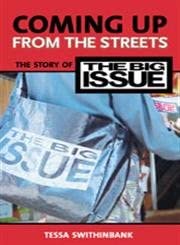
Coming Up from the Streets: The Story of the "Big Issue"
Author(s): Tessa Swithinbank (Author), Anita Roddick (Foreword)
- Publisher: Earthscan Ltd
- Publication Date: 1 Sept. 2001
- Language: English
- Print length: 240 pages
- ISBN-10: 9781853835445
- ISBN-13: 9781853835445
Book Description
The success story of "The Big Issue" is both inspirational and paradoxical; rather than a charity, it is a flourishing commercial enterprise, but one that genuinely benefits those involved. The magazine is sold by homeless and vulnerable people and, in return, they achieve financial independence and status, and self-reliance. The story of the paper's development has a practical angle; it should offer help and insights to NGOs and governments involved with the homeless, or those businesses wishing to set up enterprises for the common good.
Editorial Reviews
About the Author
Tessa Swithinbank is the manager of the International Department at The Big Issue
Excerpt. © Reprinted by permission. All rights reserved.
The Big Issue is a contradiction and a conundrum. The magazine, sold by homeless people on the streets of cities throughout Britain, has helped thousands of people earn a living since its launch in 1991. It has had a profound and sustained impact on the public's perception of homelessness, combined with an unsentimental and hands-on approach to tackling social exclusion.
It set out to propel people back from the edge into mainstream society. But not simply a job creation scheme, it was about self-esteem, people winning control over their lives, self-help, breaking dependencies and sustainability.
It was one of the most dynamic and exciting publishing phenomenons of the 1990s. The Big Issue topped the 1997-98 circulation figures of weekly current affairs magazines in the UK with national sales of 280,000. It has won a whole array of journalistic awards. It is international, with editions in Cape Town, Los Angeles and Melbourne and has led the way for a worldwide street paper movement. From Madrid to Miami and St Petersburg to Serrekunda, street papers are helping thousands of homeless and socially excluded people to help themselves. How this happened is described in this book.
The Big Issue was set up as an alternative to the traditional methods of helping homeless people. Its originality was in being a street paper which is sold by people who have an opportunity of moving on and making decisions about their own lives. Spawned by an international company, from an idea that originated in New York, the magazine was put together by a businessman and a printer, neither of whom had a charity background.
Now, the magazine and its vendors feature in TV sitcoms, in Ruth Rendell and Russell Hoban novels, on billboards, in cartoons, corporate advertisements and in school projects. It is supported by big business, the police and government. It has a vibrancy and energy remarked upon by many who come into contact with it. And it is an organization which, while campaigning against homelessness, is also a publishing business, a film maker and a book producer.
In its initial stages, the company staggered along from month to month encountering disasters, financial problems and set-backs, many of which will be described here - often in the words of those involved. The tale of The Big Issue is one of meteoric growth combined with amateurish organization, and it still suffers from being thrown together in a hurry. Despite now turning over £4m per annum, the inherent contradictions within the company stoke up an enduring battle to keep its radical edge and yet to ensure the business continues to expand to provide an income for those who need it. The Big Issue has been described as having a multiple personality disorder and a split soul.
As described in Chapter 1, conditions for The Big Issue's launch in 1991 were ripe, with homelessness at its peak. The public was dissatisfied with the government's response, and single-issue, direct action politics were beginning to replace the more prevalent left-wing politics.
When The Big Issue arrived on the scene, it entered in methodological opposition to the traditional charity work of handouts and dependency. It brought a businesslike approach to homelessness, encouraging homeless people to think of themselves as consumers. And whilst there are no definitive answers to the social problems the welfare state and voluntary organizations both try to address, there are arguments which may point towards getting rid of the dependency culture, and implementing a more business-like approach to social problems.
This book is predominantly about The Big Issue in London because it was the first one, although the four other Big Issues are portrayed in a comparative way. No doubt the founders of the others will write their own stories in time.
It set out to propel people back from the edge into mainstream society. But not simply a job creation scheme, it was about self-esteem, people winning control over their lives, self-help, breaking dependencies and sustainability.
It was one of the most dynamic and exciting publishing phenomenons of the 1990s. The Big Issue topped the 1997-98 circulation figures of weekly current affairs magazines in the UK with national sales of 280,000. It has won a whole array of journalistic awards. It is international, with editions in Cape Town, Los Angeles and Melbourne and has led the way for a worldwide street paper movement. From Madrid to Miami and St Petersburg to Serrekunda, street papers are helping thousands of homeless and socially excluded people to help themselves. How this happened is described in this book.
The Big Issue was set up as an alternative to the traditional methods of helping homeless people. Its originality was in being a street paper which is sold by people who have an opportunity of moving on and making decisions about their own lives. Spawned by an international company, from an idea that originated in New York, the magazine was put together by a businessman and a printer, neither of whom had a charity background.
Now, the magazine and its vendors feature in TV sitcoms, in Ruth Rendell and Russell Hoban novels, on billboards, in cartoons, corporate advertisements and in school projects. It is supported by big business, the police and government. It has a vibrancy and energy remarked upon by many who come into contact with it. And it is an organization which, while campaigning against homelessness, is also a publishing business, a film maker and a book producer.
In its initial stages, the company staggered along from month to month encountering disasters, financial problems and set-backs, many of which will be described here - often in the words of those involved. The tale of The Big Issue is one of meteoric growth combined with amateurish organization, and it still suffers from being thrown together in a hurry. Despite now turning over £4m per annum, the inherent contradictions within the company stoke up an enduring battle to keep its radical edge and yet to ensure the business continues to expand to provide an income for those who need it. The Big Issue has been described as having a multiple personality disorder and a split soul.
As described in Chapter 1, conditions for The Big Issue's launch in 1991 were ripe, with homelessness at its peak. The public was dissatisfied with the government's response, and single-issue, direct action politics were beginning to replace the more prevalent left-wing politics.
When The Big Issue arrived on the scene, it entered in methodological opposition to the traditional charity work of handouts and dependency. It brought a businesslike approach to homelessness, encouraging homeless people to think of themselves as consumers. And whilst there are no definitive answers to the social problems the welfare state and voluntary organizations both try to address, there are arguments which may point towards getting rid of the dependency culture, and implementing a more business-like approach to social problems.
This book is predominantly about The Big Issue in London because it was the first one, although the four other Big Issues are portrayed in a comparative way. No doubt the founders of the others will write their own stories in time.


