“In conclusion, this book provides a useful overview of the broad range of issues relevant to working with adolescent addiction. It will be particularly helpful for psychiatrists and other medical professionals who have little experience working with this population by way of alerting them to treatment related issues for consideration.” (Early Intervention in Psychiatry, 15 April 2014)
“This is an important resource for those in the field of adolescent mental health. It is not overly weighted with medical terminology, and the authors have done an excellent job of providing information with the depth that clinicians will find useful without being so clinical that the other intended readers would be lost. They have done a thorough job of providing more than just cursory information on the presentation, diagnosis, and treatment of adolescents with substance abuse problems. Although the issue of substance abuse is multifaceted, with many physiological and environmental factors at play, the book does a commendable job of organizing and outlining the evaluation and treatment modalities of substance abuse in the adolescent population.” (Doody’s, 11 October 2013)
“Nevertheless, this is the best compendium of evidence in the round in this field and an excellent reference book.” (Addiction, 1 September 2013)
“The wealth of information is brought together by a consummate clinician who cares profoundly for the young people who have come to him – whether for court reports or treatment – and who is determined to make a difference. The clinical eye that chose the authors and edited the whole has provided just what politicians as well as clinical and criminal justice practitioners are so often calling for – an evidence base for appropriate action. It should be widely read by those practitioners but also influence policy and improve life prospects for many, many young people.” (From the Foreword by Pamela J. Taylor and John Gunn, 2012)
Since 1960, the burden of adolescent illness has shifted from the traditional causes of disease to the more behavior-related problems, such as drinking, smoking and drug abuse (nearly half of American adolescents have used an illicit drug sometime during their life). Instilling in adolescents the knowledge, skills, and values that foster physical and mental health will require substantial changes in the way health professionals work and the way they connect with families, schools, and community organizations. At the same time, the major textbooks on addiction medicine and addiction psychiatry devote relatively little attention to the special problems of diagnosing and treating adolescent addicts. Similarly, the major textbooks on general and child and adolescent psychiatry direct relatively little attention to the issues surrounding adolescent addiction.
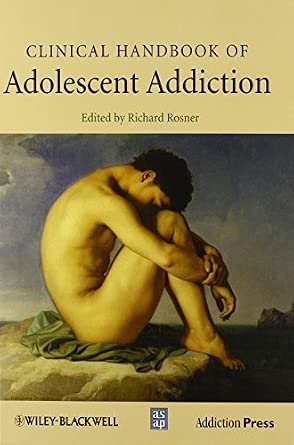
The Clinical Handbook of Adolescent Addiction is one response to the challenge of meeting the mental health needs and behavior-related problems of addicted teenagers. The work has been edited as an independent project by members of the American Society for Adolescent Psychiatry, the oldest professional organization of psychiatrists devoted solely to the mental health care and treatment of teenagers in the USA. The forensic psychiatry perspective permeates the entire book. It will help to produce health providers with a deep and sensitive understanding of the developmental needs and behavior-related problems of adolescents.
The Clinical Handbook of Adolescent Addiction is a practical tool for all those who help adolescents: practitioners of family medicine, general psychiatrists, child/adolescent psychiatrists, adolescent psychiatrists, addiction psychiatrists, non-psychiatric physicians specializing in addiction medicine, forensic psychiatrists, psychologists, clinical social workers, mental health administrators, Court/Probation/ Parole/Correctional health workers.
The book is organized in a user-friendly format so that readers can easily locate the chapters that provide the information that is required. In some instances, topics of special importance deliberately have been addressed in more than one chapter, to illuminate the topics from a variety of vantage points. One aim of the editors is to move the topic from being a specialist area to a generalist one by providing tools for generalist to use.
From the Back Cover
Since 1960, the burden of adolescent illness has shifted from the traditional causes of disease to the more behavior-related problems, such as drinking, smoking and drug abuse (nearly half of American adolescents have used an illicit drug sometime during their life). Instilling in adolescents the knowledge, skills, and values that foster physical and mental health will require substantial changes in the way health professionals work and the way they connect with families, schools, and community organizations. At the same time, the major textbooks on addiction medicine and addiction psychiatry devote relatively little attention to the special problems of diagnosing and treating adolescent addicts. Similarly, the major textbooks on general and child and adolescent psychiatry direct relatively little attention to the issues surrounding adolescent addiction.
The Clinical Handbook of Adolescent Addiction is one response to the challenge of meeting the mental health needs and behavior-related problems of addicted teenagers. The work has been edited as an independent project by members of the American Society for Adolescent Psychiatry, the oldest professional organization of psychiatrists devoted solely to the mental health care and treatment of teenagers in the USA. The forensic psychiatry perspective permeates the entire book. It will help to produce health providers with a deep and sensitive understanding of the developmental needs and behavior-related problems of adolescents.
The Clinical Handbook of Adolescent Addiction is a practical tool for all those who help adolescents: practitioners of family medicine, general psychiatrists, child/adolescent psychiatrists, adolescent psychiatrists, addiction psychiatrists, non-psychiatric physicians specializing in addiction medicine, forensic psychiatrists, psychologists, clinical social workers, mental health administrators, Court/Probation/ Parole/Correctional health workers.
The book is organized in a user-friendly format so that readers can easily locate the chapters that provide the information that is required. In some instances, topics of special importance deliberately have been addressed in more than one chapter, to illuminate the topics from a variety of vantage points. One aim of the editors is to move the topic from being a specialist area to a generalist one by providing tools for generalist to use.
About the Author
Richard Rosner, M.D., D.L.F.A.P.A., F.A.C.Psych., F.A.S.A.P., F.A.A.F.S. (Psychiatry & Behavioral Science) is Clinical Professor of Psychiatry and Former Director of the Forensic Psychiatry Residency Program, New York University School of Medicine. Former Medical Director, Forensic Psychiatry Clinic, Bellevue Hospital Center, New York, NY; Former President, American Society for Adolescent Psychiatry; Former President, American Academy of Psychiatry and the Law; Former President, American Academy of Forensic Sciences
 Wow! eBook