 Wow! eBook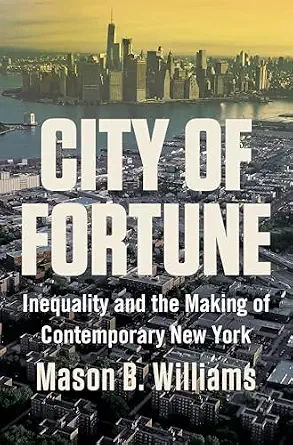
City of Fortune: Inequality and the Making of Contemporary New York
Author(s): Mason B. Williams (Author)
- Publisher: W. W. Norton & Company
- Publication Date: June 23, 2026
- Language: English
- Print length: 400 pages
- ISBN-10: 0393292851
- ISBN-13: 9780393292855
Book Description
A powerful history of New York’s transformation from a city of middle-class aspiration to one of entrenched inequality.
Postwar New York City famously expired in a 1970s tableau of burning Bronx tenements, subway graffiti, crushing debt, and the tabloid headline “Ford to City: Drop Dead.” From its ashes the city reemerged to reach new heights, whether in stock averages or the gleaming pencil towers punctuating Midtown. But at ground level the city’s basic institutions were cracking. The city was rebuilt on a foundation of deep inequality.
This elegant history traces the making of contemporary New York over the half-century from the fiscal crisis of the 1970s to the Covid pandemic. The focus is on city life in three of its key dimensions: housing, schooling, and policing. With finance and real estate driving the city’s growth, each of these areas became more exclusive, less democratic. Affordable housing grew scarce, with the homeless population surging and working New Yorkers paying rents well above the 30 percent standard of affordability. Underfunded public schools were crowded out by better-resourced charter schools and academies, magnet schools, and gifted-and-talented programs. Policing was the most volatile flashpoint over this fifty-year period. Mayor Rudy Giuliani’s Broken Windows strategy of attacking crime by cracking down on minor offenses escalated into Michael Bloomberg’s stop-and-frisk policy, which targeted young Blacks and Latinos and yielded relatively few arrests. The city’s deepening inequality was heavily racialized, one of many connections between this New York story and those of cities across the country.
The rich cast of characters ranges from mayors, governors, and headline public figures like Al Sharpton, to behind-the-scenes reformers like the progressive educator Deborah Meier, to the everyday New Yorkers who organized to support rent guidelines or local control of the schools. It is in a widespread civic engagement that the city’s progressive traditions continue to thrive.
8 pages of illustrations
Editorial Reviews
Review
― Kim Phillips-Fein, author of Fear City
“In
City of Fortune, Mason B. Williams revisits and revises the political history of New York City since the 1970s by directing our attention to the ways in which a persistent deprivation affects every New Yorker?rich, middle class, and poor.”― David Nasaw, author of The Wounded Generation
“Across every page of
City of Fortune rages a battle for the soul of contemporary New York City. Mason B. Williams offers an urgent and unsparing portrait of a metropolis that failed to learn the lessons of its 1970s collapse, and instead traded one crisis for another.”― Bench Ansfield, author of Born in Flames
“Anyone who wants to understand what has happened to New York City over the last fifty years must read
City of Fortune, a vivid, penetrating, and richly textured account of the political battles that shaped the city’s schools, housing, and policing.”― Elizabeth Blackmar, coauthor of The Park and the People
“A lucid and penetrating analysis of the interwoven forces that transformed policy approaches to the inequalities of New York City.”
―


