Wow! eBook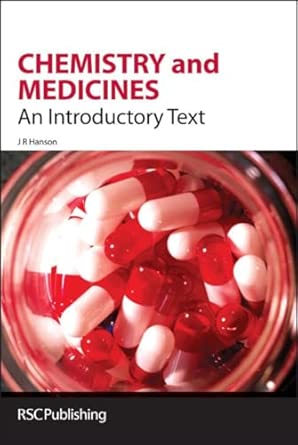
Chemistry and Medicines: An Introductory Text
Author(s): James R Hanson (Author)
- Publisher: Royal Society of Chemistry
- Publication Date: 17 Aug. 2006
- Edition: Illustrated
- Language: English
- Print length: 166 pages
- ISBN-10: 0854046453
- ISBN-13: 9780854046454
Book Description
Providing a general introduction to this fascinating subject, this book is aimed at those studying advanced undergraduate and postgraduate courses in medicinal chemistry.
Editorial Reviews
Review
A highly readable book which covers all of the main types of drugs…..history of drug discovery is excellent……an excellent introduction to all classes of drugs.
— “Education in Chemistry, 2007, (John Mann)”
Examples, exemplify the approaches and methodology that are peculiar to medicinal chemistry.
— “Chemistry World, June 2007, p65 (Michael Waring)”
Illustrates the drug development process through the thoughts of medicinal or organic synthesis chemists, and is a must read for all biochemists in the drug development sector. Destined for undergraduate chemists and biochemists, the book also offers general consultancy for post graduate and professional drug development research scientists…..each chapter includes a brief, developmental history and synthesis of the most popular drugs.Development and discovery of antiseptics such as Dettol, penicillins, ?-lactam antibiotics and AZT is most interesting. Cancer chemotherapy and the use of monoclonal antibodies are well covered in this introductory text. Then the big medical challenge: parasitic infections.
— “Chemistry & Industry, 13 August 2007, (Mary Nnankya)”
There are some science books that when reviewed you would be happy to lend out to colleagues while there are others that remain jealously guarded in a drawer. This book falls into the latter category.The content is based upon short medicinal chemistry lecture courses which have been given to students on summer schools…….students know medicinal chemistry is important and what they really need is an easy to read reference text. This is that book and I’m willing to bet that they won’t be lending it out either.
— “Physical Sciences Educational Reviews, Volume 8, Issue 1 (Elizabeth Barron)”
About the Author
Professor Hanson is Emeritus Professor of Chemistry at the University of Sussex.
Excerpt. © Reprinted by permission. All rights reserved.
Chemistry and Medicines
An Introductory Text
By James R. Hanson
The Royal Society of Chemistry
Copyright © 2006 The Royal Society of Chemistry
All rights reserved.
ISBN: 978-0-85404-645-4
Contents
Chapter 1 Introduction, 1,
Chapter 2 General Principles of Medicinal Chemistry, 20,
Chapter 3 Neurotransmitters as Targets, 41,
Chapter 4 Medicinal Chemistry and the Central Nervous System, 64,
Chapter 5 Local and Circulatory Hormone Targets, 85,
Chapter 6 Anti-infective Agents, 105,
Chapter 7 Cancer Chemotherapy, 129,
Further Reading, 142,
Glossary, 144,
Subject Index, 151,
CHAPTER 1
Introduction
1.1 AIMS
The aims of this chapter are to introduce the structure of medicinal chemistry and to show how the subject has developed. By the end of this chapter you should know the salient points concerning:
the basis for the classification of drugs;
the targets for the medicinal chemist;
the stages in the development of a drug; and
the history of medicinal chemistry.
Medicinal chemistry is concerned with the chemistry of compounds that have a beneficial effect on a disease. Its objective is to enhance this beneficial therapeutic effect of a compound by modifying its structure and to remove unwanted side effects through an understanding of the chem- istry by which the compound exerts its biological effects. Once a lead substance with a useful biological effect has been discovered, the medic- inal chemist must undertake a series of structural variations in order to establish a pattern of structure: activity relationships leading to an enhancement of the useful biological effect. While the medicinal chemist is primarily concerned with the synthesis of new therapeutic agents, there must be a considerable interaction with other disciplines; medicine and biology for the description of the disease state and the development of the bio-assay, pharmacology for the definition of the site of action and pharmacy for the delivery of the compound to the living system.
1.2 THE CLASSIFICATION OF DRUGS
Drugs may be classified in a number of ways. One way is in terms of the nature of the disease that they are being used to treat. Thus there are compounds that are used to treat infectious diseases. Second, there are compounds that are used to treat cancers and third, non-infectious diseases. The chemistry of infectious diseases is concerned with the development of drugs to injure an invading organism with minimal injury to the host. The targets are often the differences between the viral, bacterial, fungal or parasitic cells and those of man. This is the area of the antibiotics. The medicinal chemistry that is used in the treatment of cancers involves the use of drugs to destroy an aberrant cell within the host. The targets of cancer chemotherapy are the differences between the rapidly proliferating cancer cells and normal cells. Cancer chemotherapy is often used in conjunction with other forms of treatment such as radiotherapy. The chemistry of non-infectious diseases involves a study of the selective action of a drug on one cell or receptor in the host. In some cases the drugs are developed as mimics of natural hormones.
The drugs that are used in the treatment of non-infectious diseases can be further sub-divided in terms of their targets. There are a group of hormones known as neurotransmitters that are formed at nerve endings and convey the consequences of a nerve impulse to a receptor or an effector cell. There are drugs, which affect primarily the neurotransmitters in the central nervous system including the brain and the spinal cord. These include the psychotropic agents, the anti-depressants, hypnotics and analgesics. There are those agents, which affect the peripheral nervous system including the local anaesthetics. Another group of substances are those, which affect the circulatory system acting as anti-hypertensive and anti-thrombotic agents. These may interact with local hormones. These are a family of compounds that have a metabolic or endocrine target. These are compounds that are modifications of circulatory hormones that may be used as oral contraceptives or to correct a hormone deficiency. Finally there are those compounds, which target the immune system such as the immunosuppresive agents. However there is an overlap between these classes and a compound may show several types of biological activity.
The pattern of usage and the length of time over which a drug may be administered varies between the classes. Hence the extent to which side- effects can be tolerated varies quite widely. For example, an antibiotic may be given for a few days while a compound, which is given to correct a hormone deficiency or as an immunosuppresive agent may be admin- istered for years.
1.3 TARGETS FOR THE MEDICINAL CHEMIST
1.3.1 Hormones as Targets
The body produces substances known as hormones, which regulate body functions. These can be circulatory hormones such as the steroid and peptide hormones. They are produced by one organ and are then transported to their target organ. Others, such as histamine are local hormones, which are produced by one cell and have their action on adjacent cells. These are sometimes known as autocoids. The third group are the neurotransmitters, which are formed and have their action at nerve endings. A fourth group are the ‘second messengers’. These are compounds that are formed within a cell often as a result of an external stimulus via a trans-membrane protein. They control the function of various enzyme systems within the cell.
Many hormones and neurotransmitters exhibit their cell-signalling biological activity by binding to a receptor on a cell surface. The receptor may be part of a trans-membrane protein, which crosses the cell wall. This binding to a trans-membrane protein then initiates a sequence of events within the cell. Other hormones have to cross the cell wall and exert their biological activity by binding to nuclear receptors within the cell. This activates the nucleic acids and initiates the DNA –RNA–protein sequence of events.
The hormones are biosynthesized by a series of steps and once they have produced their biological effects, they are metabolized and excreted. The medicinal chemist may interact with this sequence in a number of ways. The chemist may synthesize the biological compound itself and use it to correct a deficiency or an agonist may be prepared. An agonist is a relative of the naturally occurring substance that also binds to the receptor and elicits the same biological effect. A partial agonist is a compound, which binds but does not elicit the full response. In contrast to this an antagonist binds to the receptor site but does not produce the biological effect. It may block the effect of an agonist. Often agonists and antagonists have quite similar structures for both have to bind to the receptor.
The enzymes which mediate the biosynthesis of the naturally-occurring compound may be inhibited by a drug. Hence the hormone will not be formed and its biological effect will not be observed. Many enzymes are regulated by a metabolite from a later stage in the biosynthetic pathway. This type of feedback regulation may be used to moderate the amount of biosynthesis that occurs. The release of a compound from storage may also be a regulatory step. When enzyme systems are targets for drugs, the binding may be of a competitive and reversible nature or it may be irreversible. Sometimes the product of the reaction of the enzyme with an artificial substrate may then react with the enzyme itself preventing the enzyme from catalyzing further transformations. This type of inhibition is known as suicide inhibition.
Once a hormone or neurotransmitter has completed its biological function, it may be metabolized and excreted or it may participate in the feedback regulatory mechanism associated with its formation. If these later metabolic steps are inhibited, the action of the hormone may be prolonged. The re-uptake of a neurotransmitter may form part of the regulatory mechanism. Interferance with the re-uptake mechanism may also prolong the action of the neurotransmitter. These targets are summarized in Scheme 1.
1.3.2 Cellular Structures as Targets
Cellular structures and cellular constituents provide another series of targets for the medicinal chemist. The structure and formation of the viral, bacterial or fungal cell wall provide a series of targets. These cell walls have different structures to those of man allowing for selective action. If a cell wall cannot be formed correctly, it may rupture and the cellular constituents may leak out.
A cell wall has ion-channels through which ions can pass. The ion-channels, which allow sodium, potassium, calcium or chloride ions to enter a cell, form targets. The presence of these ions in the cell affects processes such as muscle contraction.
The interaction of a cell-signalling substance with a receptor can initiate a further series of enzyme-catalysed events within the cell. These enzymes may be the target for drugs. The nucleic acids form further targets particularly in cancer chemotherapy. Interferance with the biosynthesis of nucleic acids, their translation and replication, each form targets for drugs. Thus there are a plethora of potential targets for drug action. A crucial stage in the combat of a disease is the selection of an appropriate target. The selection of the target determines the bio-assay for a drug.
1.4 THE STAGES IN THE DEVELOPMENT OF A DRUG
The first stage in the development of a drug involves the establishment of a reliable bio-assay. This may be an antibiotic screen or a screen against a particular tumour cell line. It may involve enzyme or receptor assays. These days whole animal tests are rare in the primary screens although in previous years, they have played an important part. Nevertheless because of the complexity of biological systems, there are still situations in which whole animal tests have to be used to obtain information on a potential drug. Modern enzyme or receptor screens can be very rapid and have a high throughput allowing small amounts of many thousands of compounds to be screened within weeks. This in turn has led to new synthetic methodologies in organic chemistry such as combinatorial synthesis in order to generate a suitable range of compounds for testing.
There are a number of sources of lead compounds. These may be obtained by screening natural products particularly from plants that have been used in folk medicine. The lead compound may arise from random screening or from the clinical observation of a side effect of an existing drug. The rational design of a lead compound based on the structural modification of a hormone or an active site model, is an intellectually satisfying approach.
Once a lead compound has been identified, there is a progressive structural modification to enhance the activity and to identify the contribution of electronic and steric factors to the biological activity. This can be with the aid of computer based molecular-modelling techniques. The establishment of quantitative structure: activity relationships (QSAR) can lead to the identification of a part of the molecule that is responsible for the activity, the pharmacophore.
Drug metabolism studies and pharmacokinetic studies then follow. The identification of the metabolites of a drug can involve the medicinal chemist in the preparation of labelled material. Once a compound is under serious consideration as a drug candidate, animal toxicity studies are undertaken. On the chemical side the formulation and development of a manufacturing route and appropriate analytical methods have to be undertaken. Clinical studies then follow. The phase I trials involve healthy volunteers and aim to establish the acceptability of a compound in man and obtain some pharmacokinetic data, phase II trials are with a limited number of patients and aim to establish the efficacy of the drug. This includes proof of the principle underlying the activity. Finally phase III large-scale trials are used to establish the efficacy of a drug compared to its rivals. Evidence has to be obtained concerning the safety of the drug and any contra-indications for its use. During any one of these phases development may be stopped if toxicity is detected. The submissions to the drug safety and drug registration committees then follow such as the Medicines and Health Care Products Regulatory Authority and the U.S. Food and Drug Administration. Finally if a compound is to be prescribed in the National Health Service, its effectiveness has to be assessed and a recommendation made by the National Institute of Clinical Excellence (NICE). The current time scale between the initial programme and the release of a compound for use may be between 10 and 15 years and the cost may be of the order of £500 million pounds. The need for patent protection in these circumstances is obvious. This sequence of events is summarized in Scheme 2.
1.5 THE SYNTHESIS OF A DRUG
Synthetic organic chemistry is one of the corner stones of medicinal chemistry. There are a number of criteria by which a synthesis may be evaluated in a medicinal chemistry context. A convergent synthesis rather than a linear synthesis (Scheme 3) has significant advantages. Not only are there benefits in terms of yield but there is increased flexibility. Structural variation is possible in one arm of the synthesis while keeping the other constant and vice versa. This enables structure: activity studies to be made more easily. Metabolic studies require the preparation of labelled material. It is necessary to explore not only what happens to the intact drug in the body but also to trace metabolic fragments. A convergent synthesis makes labelling different parts of the molecule easier. If a chiral centre is created in the drug then the synthesis should not only be stereospecific but also enantiospecific. The targets for most drugs are chiral. Although the required biological activity may reside in one enantiomer, the other enantiomer may have different, potentially toxic properties. A racemic mixture has to be avoided. Biotransformations involving a chiral enzymatic step have an increasingly important role to play in the preparation of a single enantiomer.
While retrosynthetic analysis must play an important role in the design of a synthetic scheme, economic considerations in terms of the availability of starting materials play an equal part. The art of synthesis in a medicinal chemistry context lies in the combination of retrosynthetic analysis with the identification of readily available basic building blocks in the target structure. The dissection of a structure into its basic building blocks can also be a useful way of remembering the structure of drugs.
In recent years high throughput enzyme and receptor screens have been developed which require large numbers of small samples for testing. This has placed considerable demands on synthetic chemists who have responded by introducing automated combinatorial methods of synthesis. The object of a combinatorial synthesis is to maximize the number of compounds that might be produced by simple combinations of starting materials and reagents to generate a library of related structures. The reactions are usually carried out by attaching the starting materials to a solid phase such as a resin by a linker. In a simple example there might be two starting materials, A and B, which are attached to separate sets of resins. These are mixed and split into two and each is then reacted with either C or D to give four compounds. If these are mixed and split again to be combined with E and F, there are eight possible combinations (2 × 2 × 2). Although this is a small library, larger libraries (e.g. 5 × 5 × 5 = 125) can be developed quite rapidly.
Once a drug reaches the stages of toxicity and clinical trials, relatively large quantities will be required. A number of additional chemical features have to be considered. Steps involving low yields and difficult separations must be eliminated. The large-scale use of hazardous reagents or those, which produce toxic residues have to be avoided. A laboratory synthesis may need to be redesigned to overcome these problems. In the subsequent chapters we will see how various syntheses fulfil these criteria.
1.6 THE HISTORY OF MEDICINAL CHEMISTRY
There is a long history of plants being used to treat various diseases. They figure in the records of early civilisations in Babylon, Egypt, India and China. The therapeutic properties of plants were described by the Ancient Greeks and by the Romans and are recorded in the writings of Hippocrates, Dioscorides, Pliny and Galenus. Some metals and metal salts were also used at this time. In the Middle Ages various ‘Materia Medica and pharmacopeas brought together traditional uses of plants. The herbals of John Gerard (1596), John Parkinson (1640) and Nicolas Culpeper (1649) provide an insight into this widespread use of herbs. Exploration in the seventeenth and eighteenth centuries led to the addition of a number of useful tropical plants to those of European origin.
The nineteenth century saw the beginnings of modern organic chemistry and consequently of medicinal chemistry. Their development is intertwined. The isolation of a number of alkaloids including morphine (1805), quinine (1823) and atropine (1834) from crude medicinal plant extracts was part of the analytical effort to standardize drug preparations and overcome fraud.
General anaesthetics were introduced in surgery from 1842 onwards (diethyl ether (1842), nitrous oxide (1845) and chloroform (1847)). Antiseptics such as iodine (1839) and phenol (1860) also made an important contribution to the success of surgery. The hypnotic activity of chloral (trichloroethanal) (1869) was also reported.
(Continues…)Excerpted from Chemistry and Medicines by James R. Hanson. Copyright © 2006 The Royal Society of Chemistry. Excerpted by permission of The Royal Society of Chemistry.
All rights reserved. No part of this excerpt may be reproduced or reprinted without permission in writing from the publisher.
Excerpts are provided by Dial-A-Book Inc. solely for the personal use of visitors to this web site.