“The book also reviews Accreditation Board for Engineering and Technology (ABET) topics as they apply to chemical reactors, making it beneficial for engineers who are preparing to take the Professional Engineer (PE) exam.” (Chemical Engineering Progress, 1 April 2013)
Provides the tools needed to solve key challenges in chemical reactor design and analysis
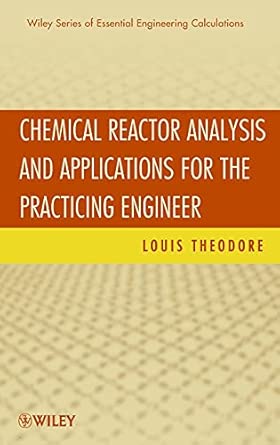
Chemical Reactor Analysis and Applications for the Practicing Engineer serves as a training tool that enables readers to effectively design and analyze chemical reactors. With its focus on applications, the text demonstrates how to design and operate a reactor that works at maximum efficiency and minimum cost, producing the highest yield of product. It also addresses operation, maintenance, and inspection (OM&I) methods and procedures to purchase a reactor. Moreover, this book includes a review of Accreditation Board for Engineering and Technology (ABET) topics as they apply to chemical reactors, making it an ideal preparation tool for readers who plan to take the Professional Engineering (PE) exams.
Chemical Reactor Analysis and Applications for the Practicing Engineer is divided into four parts:
-
Part I, Introduction, explores the history of chemical reactors, process variables, basic operations, chemical kinetic principles, and stoichometrical conversion variables
-
Part II, Traditional Reactor Analysis, addresses and compares batch, continuous stirred tank, and tubular flow reactors
-
Part III, Reactor Applications, guides readers through thermal effects, interpretation of kinetic data, non-ideal reactors, and reactor design
-
Part IV, Other Reactor Topics, examines catalysis, catalytic reactions, fluidized and fixed bed reactors, biochemical reactors, and ABET-related topics
This text is supplemented with nearly 300 illustrative examples, ranging in difficulty from solving simple equations to detailed design analysis and open-ended problems. Plus, the accompanying website features more than 200 additional problems and fifteen hours of practice exams.
With its many practical examples and emphasis on applications, Chemical Reactor Analysis and Applications for the Practicing Engineer is recommended for engineers and students, particularly those who are preparing for the PE exams.
From the Back Cover
Provides the tools needed to solve key challenges in chemical reactor design and analysis
Chemical Reactor Analysis and Applications for the Practicing Engineer serves as a training tool that enables readers to effectively design and analyze chemical reactors. With its focus on applications, the text demonstrates how to design and operate a reactor that works at maximum efficiency and minimum cost, producing the highest yield of product. It also addresses operation, maintenance, and inspection (OM&I) methods and procedures to purchase a reactor. Moreover, this book includes a review of Accreditation Board for Engineering and Technology (ABET) topics as they apply to chemical reactors, making it an ideal preparation tool for readers who plan to take the Professional Engineering (PE) exams.
Chemical Reactor Analysis and Applications for the Practicing Engineer is divided into four parts:
-
Part I, Introduction, explores the history of chemical reactors, process variables, basic operations, chemical kinetic principles, and stoichometrical conversion variables
-
Part II, Traditional Reactor Analysis, addresses and compares batch, continuous stirred tank, and tubular flow reactors
-
Part III, Reactor Applications, guides readers through thermal effects, interpretation of kinetic data, non-ideal reactors, and reactor design
-
Part IV, Other Reactor Topics, examines catalysis, catalytic reactions, fluidized and fixed bed reactors, biochemical reactors, and ABET-related topics
This text is supplemented with nearly 300 illustrative examples, ranging in difficulty from solving simple equations to detailed design analysis and open-ended problems. Plus, the accompanying website features more than 200 additional problems and fifteen hours of practice exams.
With its many practical examples and emphasis on applications, Chemical Reactor Analysis and Applications for the Practicing Engineer is recommended for engineers and students, particularly those who are preparing for the PE exams.
About the Author
LOUIS THEODORE, EngScD, is a retired professor of chemical engineering (50 years). He is the author of several Wiley publications, including Fluid Flow for the Practicing Chemical Engineer, Thermodynamics for the Practicing Engineer, Mass Transfer Operations for the Practicing Engineer, and Air Pollution Control Equipment Calculations. Dr. Theodore is also a contributor to Perry’s Chemical Engineer’s Handbook.
 Wow! eBook