 Wow! eBook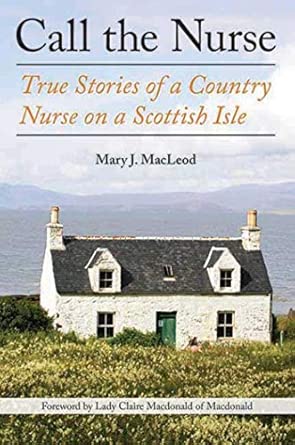
Call the Nurse: True Stories of a Country Nurse on a Scottish Isle
Author(s): Mary J. MacLeod (Author), Claire Macdonald of Macdonald (Foreword)
- Publisher: Arcade Publishing
- Publication Date: 18 April 2013
- Language: English
- Print length: 320 pages
- ISBN-10: 1611458315
- ISBN-13: 9781611458312
Book Description
Editorial Reviews
About the Author
Excerpt. © Reprinted by permission. All rights reserved.
Call the Nurse
True Stories of a Country Nurse on a Scottish Isle
By Mary J. MacLeod
Arcade Publishing
Copyright © 2012 Mary J. MacLeod
All rights reserved.
ISBN: 978-1-61145-831-2
Contents
Foreword by Lady Claire Macdonald of Macdonald, 5,
Author’s Note and Acknowledgements, 6,
Prologue Nostalgia, 7,
One On Papavray, 9,
Two Meeting Alistair, 15,
Three A ‘small acre’, 21,
Four Katy, 29,
Five A nurse ‘s nightmare, 36,
Six Back to work, 40,
Seven A castle and a corpus, 46,
Eight Deep ditches and high hills, 52,
Nine A ceilidh and a cold corner, 61,
Ten Flora and Annie, 70,
Eleven Jaynie ‘s baby, 77,
Twelve Bones and boats!, 85,
Thirteen ‘The terrible, terrible thing’, 94,
Fourteen The terrible, terrible truth, 102,
Fifteen The wedding, 111,
Sixteen Disaster at Dochart Bay, 118,
Seventeen A fragile Fergie and a shopping spree, 127,
Eighteen Something on the shore, 134,
Nineteen Nicholas, 139,
Twenty God’s country, 146,
Twenty-one Farewell to Chreileh, 153,
Twenty-two The return to roots, 163,
Twenty-three Andrew, 173,
Twenty-four Wedding bells (without the bells), 178,
Twenty-five Searching the seas, 183,
Twenty-six Shearing in the sunshine, 194,
Twenty-seven Rowing boats and rucksacks, 203,
Twenty-eight Peat, trees, and trouble, 209,
Twenty-nine Just another day, 216,
Thirty Silent stones and a sad spirit, 221,
Thirty-one Helping hands, 229,
Thirty-two The signpost, 235,
Thirty-three A bonny baby and some cheery children, 238,
Thirty-four DIY island style, 246,
Thirty-five Echo House, 253,
Thirty-six To the rescue!, 259,
Thirty-seven ‘Arry’s island, 268,
Thirty-eight Old folks’ secrets, 278,
Thirty-nine John and Joanna, 290,
Forty Days of ice and fog, 294,
Forty-one Lucky Johnny Peg-Leg, 303,
Forty-two Fire!, 311,
Epilogue Just a dream?, 318,
Glossary, 320,
CHAPTER 1
On Papavray
It was a dreary December afternoon in 1970 as I struggled upthe slippery path to the croft house on the hill above. My blueuniform and the silly hat that I had anchored with a very non-uniformscarf were no protection against the rain that wasbeing hurled in from the sea by the blustery wind. I was coldand wet, but I knew that a cheery welcome and a warm fireawaited me, and after I had attended to my elderly patient hersister would bustle about to give me a ‘wee cuppie’.
I paused on the steep slope to get my breath, pretending, asI always did, that I was just admiring the view. And what aview! Even in this weather, the island was beautiful in its wild,rugged way.
Papavray is a remote Hebridean island about 20 miles long.Numerous lochs take great bites out of the coastline so thatyou are never out of sight of the sea. Today, that sea wasturbulent with white-topped waves crashing noisily on therocks, sending spumes of spray far into the air. The mountainson the neighbouring islands were softly clothed in floatingtendrils of mist.
Above the noise of the wind, I could hear the excited voicesof young children. Wiping the rain from my eyelashes, I glancedat my watch. The little school on a nearby promontory wasbreaking up for Christmas and, as arranged, my youngest son,Andrew, would soon be meeting me at my patient’s house. Ayear ago, when we moved here, he had joined the 14 otherpupils of the island’s only primary school and had alreadybegun to acquire the sibilance and lilt of the gentle islandtongue. He was making friends but had one big disadvantage—hedid not ‘have the Gaelic’. One does not speak Gaelic—one’has the Gaelic’. Or not, in our case! It was 1970, but the moreremote Scottish islands still retained this as their first language.Most of my older patients spoke a rather quaint form ofEnglish as their second language, while some spoke only theirnative tongue.
I climbed on up to the croft house above and knocked onthe door. Of course I had been observed from the moment mycar drew up on the narrow track far below, but I still found itdifficult to just walk into people ‘s houses in the manner of thelocals. Calling a greeting, I stepped inside and removed mysodden coat, hat, and gloves. I even took my shoes off, as theyboth contained a small lake of rainwater. I had not yetcompleted a year as the district nurse on Papavray, and I stillhad some notion of looking ‘smart’ when on my rounds. Later,I would learn that welly boots were better than shoes and thatumbrellas were useless in the wind but good as walking stickson slippery slopes and for fending off territorially mindeddogs.
‘Come away in, Nurse, and warm yourself by the fire.Indeed, it’s terrible weather we ‘re having the day.’ This wasMary-Ann’s delightful greeting as I dripped my way inside.
Minnie, my dear old patient, was in the downstairs bedroom.’Ach, Nurse. You’ll be gie wet. And so busy you are, and mehere needin’ a bath.’ I usually got her up in the mornings to sitby the fire, but today was bed-bath day.
‘I’m sorry to be so late, Minnie.’
‘Ach, I’m no mindin’. I have my wireless.’
Minnie was almost completely paralysed as the result of astroke some years previously, but she never complained. Overtime, we became much more than nurse and patient, and whenshe died I felt that I had lost a friend. On this December day,we laughed and chatted as I worked, and after a while I heardAndrew’s arrival. The timid knock and shy ‘Hello’ werefollowed by much motherly tutting over his wet things. MaryAnnloved children and, like so many island women, was neverhappier than when fussing over them with cocoa and clootiedumpling, so Andrew was only too happy to accompany meon my rounds when necessary. The patients and their relativesplied him with all manner of goodies. I believe they thoughtthat I didn’t feed him very well. I was English, and the islandershad little regard for ‘fancy English food’. Good old-fashionedstodge was what had kept them full for generations.
Nicholas, my 12 year old, a much sturdier boy, had beenabout to start at the senior school a year ago, just as we left thebustle of life in the south for the peace and tranquillity ofPapavray. So, instead, he now attended the grammar schoolthat served several islands and the area of mainland where itwas situated. Sixty miles by road and as many more by ferrymeant that he and two others from our remote village had tostay in the school hostel or in ‘digs’ from Monday to Friday ofeach week. At first he hated this but settled eventually, neverbecoming a good scholar but using his personality to get himby. He was very popular with old and young alike, and as a talllad with a cheerful grin he did not want for girlfriends—evenat the tender age of 12! Nicholas and Andrew were five yearsapart but were great friends: every weekend would see themfishing or boating or roaming far and wide. They helped theshepherds with the shearing, watched calves being born or justsat at various firesides listening to crofters’ tales. It was a verydifferent childhood from that which they would have knownin the south. Our two older children were not with us on theisland, having left home before we moved. Elizabeth was incollege in London while John had left another college after aterm, having decided that the academic life was not for him.He had a job of sorts and lived with a group of friends in thecapital.
My husband, George, had been completing an overseascontract, but when he finally came to live in Dhubaig, ourvillage, he became a sort of Jack-of-all-things-electrical forthe island. We were afforded much amusement by the crofters’plaintive requests for George to breathe new life into variousdying devices. Electricity had only come to the islands in 1950and many remote glens still had none, so most of the crofters’electrical possessions had been purchased in the first excitement,and 20 years later they still expected them all to workperfectly. How often were we told ‘This was a good, goodkettle ‘? Interestingly, many of the croft houses had electricirons, kettles, and so on but still no indoor toilet. I knew of twothat had no toilet at all! During one summer, I gained intimateknowledge of this deficiency as a result of too many cups oftea.
As Andrew and I stood in the little hall, pulling on our still-wetcoats, we could see that the rain had stopped. A huge silvermoon was on the horizon, casting its own eerie glow to jointhe fading light of the gloomy winter day. There was afreshness in the air that spoke of calmer, drier weather to come.
‘It’s going to be fine for Dad coming,’ Andrew said, echoingmy thoughts.
George was coming home for Christmas and would be withus some time the next day—weather permitting, of course. Hehad flown in from South Africa and was driving up fromHeathrow in time for our second Christmas on Papavray andour first in our house: we had lived in a caravan while therebuilding took place.
‘And Nick and Elizabeth and John,’ continued Andrewexcitedly, as we hurried to the car. The family invasion thisyear would include Elizabeth’s latest boyfriend, Jeff … or wasit Jim? Or Paul?
‘And Nurse Robertson is coming to do your work overChristmas, isn’t she?’ Andrew was jumping down the hill inleaps and bounds. ‘And you won’t be called out or anything,will you?’ he added anxiously.
I shook my head. No night calls for five days. What bliss!
We drove the eight or nine miles over the hills to the wilderside of the island, to our home in its acre or so of land facingthe sea and the distant mountains. The sky had cleared and thewinding road was bright in the moonlight, while the darkwaters of small lochs sparkled among the reeds. Twinklinglights showed from the other islands and the moon waspainting a silver path across the sea.
Later that evening, when both boys had gone to bed, I satalone by a huge peat fire. I was sleepy but determined to catchup on my photo albums. I have kept a chronological record ofour lives before and since our arrival on Papavray, but I amnot good at putting the results into albums. In fact, I had notinserted any at all since our first sight of Papavray. There hadbeen several packets of photos on the sideboard for some timenow, and I had to get down to the task before the familyarrived. They definitely did not share my enthusiasm forphotos!
I sorted them into order and began to arrange them onto thepages of an album, but inevitably I began to study them,remembering the incidents and the people that they portrayed.It’s like spreading newspaper over the carpet before decorating:one always crawls around reading long-outdated news.So it was with the photos.
There was the beach, the caravan and Alistair’s boat. Andthe sunshine! What a contrast in the weather at that time, twosummers ago, from the bitter cold of the night outside as I satso cosily by my fire. Each photo evoked memories and theamazement that we had felt as events had worked steadilytowards our present life.
CHAPTER 2
Meeting Alistair
For a long time, we had been disillusioned with the way of lifein the south of England where we lived, and George ‘s workwas pressurised and unrewarding. We had begun to cherish adream of something better, gentler, a different environmentaltogether. Scotland, where George ‘s father was from, cameto the forefront of our minds. For years it was just a dream, butthen, quite suddenly and unexpectedly, it came true. And it allbegan the very first time that we set foot on this Hebrideanisland.
It had been in the July of 1969 when we came to Papavrayon holiday with Nicholas, Andrew, and Duchess the retriever.We had parked our caravan on the grass beside a little beachwith the sea shushing and lapping at the pebbles nearby.
George was a Glaswegian. His father had left Papavray tofind work while still a young man and, like so many, had goneto Glasgow, where he lived, worked, and died without everreturning to the place of his birth. Somehow, George had neverhad the urge to visit the isle of his antecedents. Until now!
Elizabeth and John had already started college by then andthought we were mad to travel so far just to ‘sit on an island’,as they put it. Nick and Andy had very different ideas. We hadonly arrived the night before but they were alreadypronouncing this as ‘the best place in the world’.
So here we were on this quiet little beach enjoying the clearnorthern air. There was quite a large house in a garden nearbyand two cottages appeared to be growing out of the rocks of apromontory across the bay. Apart from these buildings, wewere alone, looking across the sea loch to a couple of islets andaway to distant mountains. The setting sun was sendingslanting bronze light across the water, burnishing the tops ofthe waves as they broke against the far shores. I could smellthe peat smoke that was rising in blue snakes from the whitechimneys of the two cottages.
We had wondered, with our southern conditioning, if wewould be allowed to park on the beach, but as we were self-sufficientfor two days, carrying twenty gallons of water andhad the all-important loo, we were cautiously hopeful. However,the flimsy and all-too-obvious loo tent fell victim to the windafter only one day’s use.
We had become aware, during the night, of an odd slappingnoise on the side of the caravan in the blustery wind. Onpeering out of the window, I was just in time to see the loo tentheave itself upward, break its guy ropes and leap into the air.Like a kite in the hands of an amateur, it touched down twicebefore disappearing skywards. We thought of attempting arescue but on opening the door to the gale quickly decidedotherwise.
When morning came, we awoke to chuckles and somerather rude remarks from the boys, who were looking out ofthe window. The chemical toilet was sitting in lonely splendouron the beach like some unsophisticated throne of a minorpotentate, while some of the toilet roll was attempting to wrapitself around it as though trying to clothe its nakedness. Therest of it was in small pieces that were fluttering damply overthe pebbles and out to sea like so many demented seagulls.Later, on a boating trip to the islets, we found the tent drapedlike a pall over a large rock. It was beyond repair. Luckily, wewere invited to put the loo in a nearby shed!
On a leisurely walk later that day, I stood and watched alarge yacht sailing up the sea loch. Little did I know then howmuch this boat, or rather its occupant, would change our lives.
It was a rather luxurious boat, and I watched as it glidedinto the bay. It anchored and, after some delay, a dinghy waslowered, packages appeared and were stowed and then a none-too-nimblefigure got in and the craft began chugging towardsthe shore. He made landfall at a little jetty and started tounpack the dinghy. George and the boys joined me and we ranalong the path to offer assistance. Or were we just being nosy?In any case, our offer was accepted with alacrity.
The boat owner lived in the house with the garden, and itproved to be up about 30 steps. We puffed and groaned ourway up with boxes and packages to find ourselves in a beautifulgarden. Real gardens are rare in the islands, as the harshweather, poor soil, ravages of deer, rabbits, cows, foxes, andevery other living thing makes the growing of anything otherthan potatoes almost impossible. But this was a gardener’sgarden. We collapsed onto a stone bench, hot and breathless.We all introduced ourselves.
Alistair Macphee had the typical short, stocky shape of theHighland hill-dweller, his appearance belying a preciseEnglish accent. Clad in a navy-blue jersey and seaman’s capand sporting a large moustache, his teeth were firmly clampedround an empty pipe.
‘Come in, come in! We all need a dram after that,’ heannounced, without removing the pipe. Having spent severaldays alone on his boat, Alistair was ready to chat, so, packagesforgotten, we settled down to hear his life story.
He had been born on the island during the First World Warand lived among the local children until the age of eight, whenhis father decided to leave Papavray to start a business in thesouth of England. Alistair grew up there, and when he reachedadulthood he took over his father’s business and became quitewealthy. However, he never lost touch with Papavray, andwhen he was nearing 50 he decided to retire to his native islandand put managers in to run the business.
So he built this lovely home and travelled to Londonoccasionally to keep an eye on the business but always returnedwith a sense of relief. He said that Papavray was civilised andLondon was barbaric. Alice, his wife, whom we met later, wasthe gardener.
That day, as we sat in this lovely house and gazed across thesunlit bay to the hills and mountains beyond, our dream wasstill just that … a dream. Of living somewhere like this, ofbecoming a part of a slower way of life, of waking to the soundof the wind or the birds instead of listening to ten-ton trucksrumbling past.
Of course, there were enormous difficulties. Work, somewhereto live, education for the boys. But now we were talking toAlistair. And that made all the difference. He entered into thespirit of our aspirations with enthusiasm.
As far as work was concerned, we knew that you could tendsheep, fish, grow potatoes, and so on, but these were notoptions for us. Whilst we were prepared to do without luxuries,we did not want poverty. George was used to designing andinstalling computerised control gear for large industrialconcerns all over the globe. Had we been talking with acrofter, he would have felt that the sheep-tending or fishingwas all that we should require. Someone from the south witha conventional background, on the other hand, might notunderstand why we wanted to relocate to the far north at all.But here was Alistair, who understood both points of view.An islander by birth and inclination, he knew well the pull ofthat way of life, but, being an erstwhile businessman, he alsoappreciated our expectations of that life: a decent standardfor the boys, a comfortable home and enough for some of thefiner things of life, not just a pound left over when the billswere paid.
If George was prepared to do basic electrical work, saidAlistair, like house wiring and installing radar and sonarequipment on fishing boats, with a possible departure into theerection of TV aerials … We looked surprised at this, but itseemed that the first television signals were only just reachingthe island.
He puffed ruminatively on a pipe that had several deadmatches sprouting from its bowl. We were to learn that hevery rarely smoked tobacco, only dead matches, so inexpertwas he at lighting his pipe.
Looking doubtfully at me, he said, ‘Do you do anything?’
Did I do anything? Apart from having four children,George ‘s invalid mother to look after, a husband who wasrarely at home, a dog, two cats, a caravan, and a large houseand garden, I also had a job as a nurse/health visitor! Did I doanything???
(Continues…)Excerpted from Call the Nurse by Mary J. MacLeod. Copyright © 2012 Mary J. MacLeod. Excerpted by permission of Arcade Publishing.
All rights reserved. No part of this excerpt may be reproduced or reprinted without permission in writing from the publisher.
Excerpts are provided by Dial-A-Book Inc. solely for the personal use of visitors to this web site.


