 Wow! eBook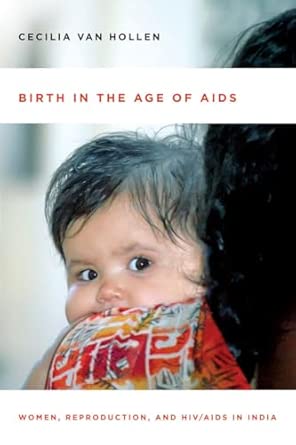
Birth in the Age of AIDS: Women, Reproduction, and HIV/AIDS in India
Author(s): Cecilia Van Hollen (Author)
- Publisher: Stanford University Press
- Publication Date: 3 April 2013
- Edition: New
- Language: English
- Print length: 288 pages
- ISBN-10: 0804784221
- ISBN-13: 9780804784221
Book Description
Editorial Reviews
Review
"
Birth in the Age of AIDs is an important and beautifully written ethnography of women dealing with HIV/AIDS in India. Van Hollen delves into the life stories and narratives of young HIV-positive mothers, illuminating the lived nature of the epidemic as well as the intricate workings of gender and family, sexuality, biomedicine, stigma, and poverty. This original and riveting book will make a major impact in medical anthropology, gender studies, South Asian studies, and understandings of HIV/AIDS in global context."--Sarah Lamb "Brandeis University""
Birth in the Age of AIDS brings out the roles of policy and network activism in supporting pregnant HIV-positive women. This support structure has helped them deal with cultural stigmatization and gender inequalities and seek social justice. Lucidly documented research findings along with discussion on policy insights make this book an important reading for all who are directly or indirectly engaged in the field of reproductive and child health."--Shalini Rudra "Economic & Political Weekly""
Birth in the Age of AIDS is a deeply sensitive and thoughtful account of global health interventions on the ground. The women in this stirring book not only fight AIDS, stigma, and economic insecurity but also craft possible futures, humanize policy debates, and make an unequivocal case for new practices of care."--João Biehl "Princeton University""[Van Hollen's] comprehensive analysis of how HIV+ women fare in a fiercely androcentric part of India sheds light on how the vicious stigma of HIV/AIDS impacts their lives and can result in blatant discrimination . . . Recommended."--C. Apt "
Choice""As a seasoned ethnographer of gender and reproduction in Tamil Nadu province, Van Hollen writes with maturity, confidence, and a wealth of experience . . . One of this book's major contributions is that it shows how the stigma surrounding HIV/AIDS produces and reproduces gendered inequalities in a setting where women face arranged marriage, patrilocal residence, pressure to bear children, and a sexual double standard . . . This fine ethnography fits well under the rubrics of Asian studies, global health, medical anthropology, gender studies, and the anthropology of reproduction . . . Van Hollen proves that careful ethnographic research is indispensable to understanding the actual, lived effects of infectious disease control programs, an insight that will surely resonate with public and global health practitioners and other readers outside of anthropology."--Lynn M. Morgan
"By sharing these women's experiences in their own words, [Van Hollen's] work addresses a critical gap in what we (think we) know about HIV and AIDS . . .
Birth in the Age of AIDS is a quick, compelling read that will appeal to readers working in a number of related fields . . . [Van Hollen] hints at the delicate balance advocates have to strike in relation to rapidly shifting policy imperatives and local needs, and provides a poignant reminder that there are often unintended consequences of activism that only come into focus in hindsight."--Kristin Francoeur"Cecilia Van Hollen's latest book,
Birth in the Age of AIDS: Women, Reproduction, and HIV/AIDS in India New Edition, provides a nuanced, readable, and extremely compelling exploration of the lived experiences of women enrolled in prevention of parent to child transmission programs in Tamil Nadu, India in the first decade of the 21st century . . . This book is an excellent and very accessible example of the ethnography of HIV/AIDS, and will be of interest to scholars and students of medical anthropology, global health, feminist anthropology, and India."--Lily Shapiro "Somatosphere""Perhaps the single most powerful feature of Cecilia Van Hollen's deeply empathic, elegantly crafted, incisive, and thoroughly engaging analysis is the way in which women's voices are manifested with all of the profound feeling, complexity, and nuance that is attendant on struggles for adequate and meaningful self-representation in contexts of inequality, marginalization, poverty, and stigmatization."--Joseph Alter "
American Ethnologist""Poor pregnant women targeted by HIV-prevention programs in Tamil Nadu understand their decisions about testing to signify empowerment, assert their superior maternity through the unlikely sacrifice of not breastfeeding, and mobilize power through HIV-support networks. Van Hollen's meticulous and fascinating study reveals how 'global' health practices create unexpected local effects."--Claire Wendland, Departments of Anthropology and Obstetrics & Gynecology "University of Wisconsin"
"This book begins to fill an important gap in the literature on women living with HIV. Based on an extensive and rigorous process of ethnographic fieldwork it explores the pregnancy and childbearing experiences of a sample of Indian women from a variety of backgrounds. Treading carefully between the social constraints imposed on these women and their exercise of their own autonomy it provides a rich and textured account of what are too often invisible yet vital aspects of human life. It is clearly written and well referenced and will hopefully provide a model for similar studies in other parts of the world."--Lesley Doyal, Emeritus Professor of Health and Social Care "University of Bristol"
"This book is a ground-breaking investigation into the reproductive lives of HIV-positive women. The ethnographic setting, the South Indian state of Tamil Nadu, is moreover a very illuminating one for global health . . . Van Hollen contributes significantly to debates about the authoritarianism of reproductive medicine and the state in South Asia, and women's gendered agency in negotiating these structures, as well as the ambivalence and destructive guises of kinship."--Kaveri Qureshi "
Pacific Affairs""This path-breaking volume is the first to examine HIV within the contours of women's reproductive lives--both as pregnant wives and birthing mothers--in the low-caste communities of southern India. Van Hollen's compassionate, humanizing account sheds light on women's strength and resilience in the midst of a cruel epidemic."--Marcia C. Inhorn "Yale University"
"Van Hollen's remarkable book is as much about global health as it is about India's national health policy and local experiences. The author situates her work firmly within the growing annals of medical anthropology that document how discourses of global health intersect with local realities. There is insightful analysis of how global health techniques--such as of informed consent--are implemented in Tamil Nadu hospitals. While acknowledging some of the problematic reasons for the centrality of informed consent procedures, she nonetheless focuses on them in order to highlight the gap between global policy on the one hand and local practice on the other hand. But the analysis of informed consent does more work than just highlighting the gap between policy and practice. In choosing to study a practice that is central to the global health vernacular, the author renders the Indian epidemic recognizable across countries, inserting the experience of the women in Tamil Nadu into frameworks that can be understood beyond India."--Manjari Mahajan "
Bulletin of the History of Medicine""When [Van Hollen] includes the women's histories as well as quotes from interviews, they are rich and deeply poignant . . .
Birth in the Age of AIDS is an important ethnographic account that is well worth the read."--Angela Kelly-Hanku "The Asia Pacific Journal of Anthropology"About the Author
Excerpt. © Reprinted by permission. All rights reserved.
Birth in the Age of AIDS
Women, Reproduction, and HIV/AIDS in India
By Cecilia Van Hollen
Stanford University Press
Copyright © 2013 Board of Trustees of the Leland Stanford Junior University
All rights reserved.
ISBN: 978-0-8047-8422-1
Contents
Acknowledgments............................................................viiNote on Statistics and Transliteration.....................................ixAbbreviations..............................................................xiPrologue: Into the Well and Out Again......................................11 Birth in the Age of AIDS.................................................52 India Responds to the Epidemic...........................................373 "The HIV Test Is Like an Immunization": Scenes from Prenatal HIV
Counseling.................................................................554 "I Don't Need My Husband's Permission": Women's Views on HIV/AIDS and
Decisions About Prenatal Testing..........................................755 HIV/AIDS and the Gendering of Stigma.....................................956 To Birth or Not to Birth? Constraints and Pragmatics in HIV-Positive
Women's Childbearing Decisions.............................................1257 HIV-Positive Women Give Birth: Deception and Determination...............1558 Breast or Bottle? HIV-Positive Women's Responses to Global Health Policy
on Infant Feeding..........................................................1839 Creating a Storm: Activists' Hopes and Mothers' Fears....................213Epilogue: Memory Boxes.....................................................241Notes......................................................................245Bibliography...............................................................253Index......................................................................269
Excerpt
CHAPTER 1
Birth in the Age of AIDS
THIS IS A BOOK ABOUT HIV/AIDS AND CHILDBIRTH—two phenomena that may seem incongruous. Oneconjures up illness and loss; the other life and hope. Yet of the 2 million children living with HIVworldwide, 90% have acquired the virus from an HIV-positive mother during pregnancy, birth, orbreastfeeding (UNAIDS 2008: 33–37). We often read about such demographic statistics generated byorganizations such as the Joint United Nations Programme on HIV/AIDS (UNAIDS), the World HealthOrganization (WHO), or the Centers for Disease Control and Prevention (CDC). But what do we knowabout the experiences of these women? What is it like to go through pregnancy knowing that you are anHIV-positive woman? How do you decide whether to give birth to a baby if you are HIV-positive? Is thebirth event itself different for an HIV-positive woman? And how does being HIV-positive affect theexperience of feeding your newborn? In short, does being HIV-positive transform the experience ofbecoming a mother? If so, how? The answers to these questions are as numerous and varied as the numberof women involved and are influenced by the contexts of their lives, such as their nationality, class,ethnicity, race, religion, sexual orientation, kinship arrangements, and the year in which they are pregnant.
In this book I explore the lived experiences of pregnancy, childbirth, and motherhood in the age ofAIDS among low-income and lower caste women living in the South Indian state of Tamil Nadu in theearly twenty-first century (see Map 1). My focus is on the impact of the Prevention of Parent to ChildTransmission (PPTCT) of HIV program on women's lives in India. This program, jointly organized byUNICEF and the Government of India, provides free HIV counseling and testing to pregnant women ingovernment maternity hospitals and provides free single-dose antiretroviral therapy to pregnant mothers who test HIV-positiveand their newborns. The program was piloted in 2000 and formally inaugurated in Tamil Nadu inSeptember 2002. Women may come to learn of their HIV-positive status before, during, or after theirpregnancy (or not at all). Because I am particularly interested in the impact of this PPTCT program, in thisbook I foreground the experiences of those women who learned of their HIV-positive status duringpregnancy.
The adult HIV prevalence rate in India is low—currently reported to be 0.34% (UNAIDS 2009)1—butbecause of India's large population (more than 1 billion people),2 the country ranks third worldwide inactual number of people living with HIV/AIDS—2.4 million—behind South Africa and Nigeria (UNAIDS2008). Of those 2.4 million people, only 50% were thought to be aware of their HIV status in 2008–2009,thus making the population vulnerable to a potentially dramatic spike in the number of HIV-positive people(NACO 2009: 15). However, reported HIV prevalence rates for India have fluctuated wildly and have beenhotly contested. Regardless of statistical disputes or irregularities, as the country with the highest number ofHIV-positive people in all of Asia, India is clearly confronting a daunting epidemic, and global healthorganizations and governments around the world are responding.
The HIV/AIDS epidemic is more challenging to manage for cultural and political reasons than forbiology reasons alone. As a medical anthropologist, I draw my attention to these sociocultural dynamics ofHIV/AIDS. As an anthropologist interested in the impact of global and national policies and programs onlocal communities and individual lives, I recognize that although a program such at the PPTCT programmakes good public health sense, its social effect transcends the health arena. In this particular case, inwhich low-income mothers are the targets of this health policy, structures of gender, socioeconomic classand caste, and global economic and political inequalities among nations influence both how the program isimplemented and the repercussions that it has on women's bodies and lives—within their families, ininteractions with medical practitioners, and with organizations providing care and support for people livingwith HIV/AIDS. As Didier Fassin has so aptly stated in his poignant ethnography of HIV/AIDS in SouthAfrica, the experiences of people living with HIV/AIDS in places around the globe that may seem remotefrom any given standpoint should not be viewed as foreign but rather as part of a shared humanity that wemust think about "less in terms of difference than inequality, less a matter of culture than history" (Fassin2007: xv). Describing the experiences of those women in India whose lives have beentouched by HIV/AIDS and by this global health program to prevent the transmission of HIV frommother to child is thus also a way to portray the local embodiment of world history.
To foreground inequality is not, however, to deny the significance of cultural variation. Medicalanthropologists view illness and disease as a window into understanding social life and cultural forms. Wecan learn much about societies' belief systems, including our own, by observing responses to disease.Likewise, a deep look into what causes illness, why certain people get sick, why certain people die, andhow diseases travel reveals a great deal about human social organization and value systems. HIV/AIDS isarguably one of the most salient diseases to think about anthropologically precisely because it evokesintense moral responses that both reinforce and challenge cultural norms and because it reveals so blatantlythe gross inequalities of our world. As Arthur Kleinman and Paul Farmer wrote in the early years of theHIV/AIDS pandemic, "All illnesses are metaphors. They absorb and radiate the personalities and socialconditions of those who experience symptoms and treatments.... The way in which a person, family, or acommunity responds to AIDS may reveal a great deal about core cultural values" (Farmer and Kleinman2001: 353–56).
Anthropologists and other social scientists have found that in India AIDS is interpreted predominantlythrough the lens of the morality of sex. The prevailing view is that HIV/AIDS comes about as a result ofpremarital and extramarital sexual relationships, both of which fall outside the prescribed norm in India.Recent studies have revealed that sexual practice does not always conform to the stated ideals (Puri 1999;Verma et al. 2004). Nevertheless, the norms prevail. Thus, to be HIV-positive is to be marked with a gravesocial transgression, and the disease is intensely stigmatized. Media reports of HIV-positive people beingostracized in all arenas of social life in India—the family, the workplace, medical settings, and thecommunity—are commonplace. Such discrimination fosters a culture of secrecy in which HIV-positivepeople avoid disclosing their status as a coping strategy. It also can lead to high rates of depression andeven suicide among this population (Chandra et al. 1998; Steward et al. 2008). As a result, the government,nongovernmental organizations (NGOs), and community-based organizations (CBOs), which are known asnetworks run by and for people living with HIV/AIDS in India, are not only engaged in HIV preventionand treatment but also waging a campaign to prevent the stigma and discrimination that plagues thoseaffected by the disease. In this book I draw from Erving Goffman's seminal theoretical discussion onstigma (Goff man 1963), but I do so in the same vein as Richard Parker and Peter Aggleton, who argue that stigmamust be viewed not simply as an individual psychological process but as a key component of social powerand as "central to the constitution of the social order" (Parker and Aggleton 2003: 17).
Anthropologists who study reproductive health similarly argue that the management of and beliefsabout the processes of reproduction both reflect and transform sociocultural systems and get to the heart ofideas about the body, life, gender, family, and, increasingly, technology. As Faye Ginsburg and RaynaRapp wrote in the introduction to their edited volume, Conceiving the New World Order: The Politics ofReproduction, "Regardless of its popular associations with notions of continuity, reproduction alsoprovides a terrain for imagining new cultural futures and transformations" (Ginsburg and Rapp 1995: 2). Inthis book I thus explore how responses to HIV/AIDS in the context of birth and motherhood both reflectand transform social relations and cultural value systems. For example, although the stigma experienced byHIV-positive people, particularly women living with HIV/AIDS, serves to reproduce and enforce Indianand Tamil cultural norms of sexual morality, the presence of HIV/AIDS and its spread to rural areas and toindividuals who are not associated with high-risk groups, as has become increasingly evident through wide-spreadprenatal testing, also reveals the cracks between imagined cultural ideals and actual practice, leadingto increased self-reflection about the unstable and changing nature of cultural identity. Furthermore,although HIV-related stigma may serve to bolster preexisting forms of gender-based discrimination, suchas taboos against widow remarriage and denial of inheritance rights of women, HIV-positive women whobecome affiliated with feminist, human rights–based organizations to combat discrimination against HIV-positivewomen are publicly pushing back against both of these social conventions; in doing so, they mayhelp to open up the social space to combat these forms of gender discrimination not only for HIV-positivewomen but also for women in Tamil Nadu or in India more broadly.
Focusing on HIV/AIDS and birth compels me to draw from the anthropology of reproduction and theanthropology of AIDS, both robust subfields within medical anthropology. This project is the first of itskind to deeply explore the intersections of reproduction and HIV/AIDS from an ethnographic perspective,bringing forth the voices of women from one part of the world as they struggle and strive to make sense ofthe effect that HIV/AIDS and programs that have emerged in response to this disease have had on theirreproductive lives.
Global Health Policy: Local Reality
Both reproductive health and HIV/AIDS have been major foci of global health organizations involved inwhat has broadly been called international development. The international development agencies, whichfirst emerged in the post–World War II era, were and continue to be an important factor in the processes ofglobalization, with new international organizations, such as UNAIDS and the Global Fund to Fight AIDS,Tuberculosis, and Malaria, coming into play and new foundations, such as the U.S.-based Bill and MelindaGates Foundation, the Clinton Foundation, and the Gere Foundation, supplementing earlier householdnames, such as the Ford Foundation and the MacArthur Foundation. Programs designed within the arenasof such international development organizations to combat HIV/AIDS and maternal and infant mortalityand morbidity are implemented globally and attempt to both work within and transform local practices andsystems of knowledge to improve health outcomes. The proliferation of such organizations working inhealth-related fields in India along with the rise in local NGOs has been a direct result of the neoliberal turnin India and the government's retrenchment from the provision of health services (Finn and Sarangi 2008).Anthropologists have been keenly interested in examining the relationships between such global initiativesand discourses and their local manifestations. In the introduction to their 2000 edited volume Global HealthPolicy, Local Realities: The Fallacy of the Level Playing Field, Linda Whiteford and Lenore Mandersonargue that "too often international health planners design programs based on the assumption that 'all else isequal' and that each recipient nation shares the same 'level playing field.' The assumption of uniformitymay be necessary to the process of planning global health programs but also may create needless barriers totheir effective execution" (Whiteford and Manderson 2000: 1–2). These writers call for more studies of thelocalization of international health policies and programs, and my work is a contribution to that end.Understanding how global health policies and discourses about HIV/AIDS and reproduction intersect withlocal realities and inform everyday practices for poor women in Tamil Nadu is a primary goal of this book.
Global health policies are, of course, not developed in a vacuum. Typically these policies are rooted inlocal U.S.-based or European contexts or they emerge out of globalizing processes themselves, such ascolonialism, postcolonial development projects, and currently the global spread of neoliberalism. In thissense these global health policies carry with them core cultural and political values and interests of thosecontexts. This book is a historically specific ethnographic study of the intersection of such global health policies,state policies, and local practices on the reproductive lives of HIV-positive women in Tamil Nadu, South India, at thebeginning of the new millennium.
What I found is that there are unintended consequences of the PPTCT program. My research suggeststhat low-income pregnant women who are the targets of this program are given little choice over whether ornot to get tested for HIV and how to proceed with the pregnancy once they receive an HIV-positivediagnosis. My research also demonstrates that as a result of this program, women are being diagnosed asHIV-positive before their husbands, and this can have negative repercussions on the status of womenwithin the extended patrilocal, patrilineal family structure, because women are accused of beingpromiscuous and are blamed for bringing HIV/AIDS into the family, thereby exacerbating preexistinggender inequalities. As a result of their HIV-positive status, these women, like Saraswati, may be ostracizedfrom their husband's family. Many become AIDS widows at a young age, and their HIV status becomes ajustification for their husbands' families to force them out of the home. With little or no education, theyface grave difficulties supporting themselves and their children. Even though women are tested for HIV inthe interest of improving public health, their HIV-positive status often leads to stigma and discriminationwithin the medical arena itself, even when seeking basic obstetric care.
To make matters worse, during the first half of 2004, when I conducted most of my ethnographicinterviews, although the government was providing antiretroviral medicine to prevent HIV transmissionfrom mother to child, it was not providing antiretroviral treatments for the mothers themselves. Thus anHIV-positive diagnosis during pregnancy was sometimes experienced as both a social and a physical deathsentence for these women. Since that time the government has established an antiretroviral therapy (ART)program for such women, and networks and governmental bodies have worked hard to overcome the publicstigma associated with HIV/AIDS in India. This has led to some improvement in the quality of life ofwomen who test positive through the PPTCT program, although at the tail end of my research in 2008 ARTwas still difficult for some to access and the stigma associated with HIV/AIDS was far from eradicated.
The choices of lower class and lower caste women are limited within the context of decisions aboutHIV testing during pregnancy and in relation to the experience of birth and infant feeding for HIV-positivewomen. These choices are highly influenced by structures of global health policies and by national andstate public health policies and services, international and national policies concerning the manufacture and sales ofpharmaceuticals, transnational human rights and feminist organizations and discourses, gender and kinship structures,and social class and caste. Nevertheless, although my work makes these structures apparent, I also highlight the waysin which women use their agency to navigate these structures in pragmatic and creative ways.
Structure, Agency, and Gender
It is assumed in the United States (and elsewhere) that women in India are subjugated and have little or nocontrol over their reproductive lives, the implication being that North American and European women havesubstantially more decision-making power and act as free individuals. Much has been written about theways in which such "othering" discourses on "non-Western" or "third world women" primarily serve tocreate a sense of superiority in the "West" (Mohanty 1991; Abu-Lughod 1993). I recognize that thereproductive decisions of the women I met were constrained by social and cultural structures, includinggender inequality. This is true of women everywhere. But, using Laura Ahearn's definition of agency as "the culturally constrained capacity to act" (Ahearn 2001: 54), I drawattention to women's agency as they frame their decisions in response to the previously mentioned set of factors.
(Continues...)
(Continues...)Excerpted from Birth in the Age of AIDS by Cecilia Van Hollen. Copyright © 2013 by Board of Trustees of the Leland Stanford Junior University. Excerpted by permission of STANFORD UNIVERSITY PRESS.
All rights reserved. No part of this excerpt may be reproduced or reprinted without permission in writing from the publisher.
Excerpts are provided by Dial-A-Book Inc. solely for the personal use of visitors to this web site.


