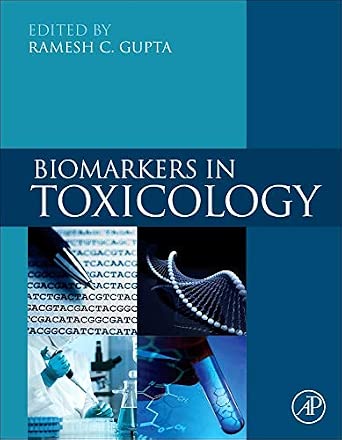
“…thoroughly conveys the very important role that biomarkers play in biological research and other applications…provides an indepth reference resource for those in the field of toxicology and chemical safety assessment.”–Lab Animal
“…an important text for every toxicologist because the scope of the volume is greater than simply identifying indicators of adverse consequences of toxicants…will become a standard text and reference for every toxicologist.” –International Journal of Toxicology
“This is a thorough book, covering animal models, organ systems, and specific xenobiotic classes in biomarker research. Animal models and mechanisms of toxicity are particularly well covered…This is the first book of its kind, and it is a fantastic introduction and reference for anyone interested in biomarkers of toxicity.” Rating: 3 Stars –Doody.com, June 6, 2014
“The book presents an excellent comprehensive discussion of biomarkers in various specialized areas of toxicology. These include toxicity testing models, biomarkers in biological systems and special physiological states such as certain disease conditions, specific agents as biomarkers, and biomarkers of special areas of interest such as petroleum products, radiation, nanoparticles and carcinogenesis. It strengthens the scientific information with discussions in biomarker applications in toxicology such as in biomonitoring, evaluation of pharmaceuticals and susceptibility, indicators of toxicity, computational toxicology and risk assessment. It is unique in the broad coverage in the overall areas and in the in-depth knowledge in each area. The discussion of biomarkers in biological or organ systems is particularly useful for an understanding of some issues relating to key toxicity endpoints for the nervous system, cardiovascular system, respiratory system, ocular system, gastrointestinal system, skeletal system, immune system, placenta, blood and bone marrow, kidney, liver and pancreas. It is an outstanding reference source for those interested in biomarkers in scientific and biomedical fields, toxicology and risk assessment.” -Anna M. Fan, PhD, DABT, California EPA, Office of Environmental Health Hazard Assessment, Oakland, CA
“Natural and man-made toxins (pesticides, manufacturing chemicals, natural toxins, etc.) are important elements of the world where we now live. This book, “Biomarkers in Toxicology” provides an extensive and broad review of current markers for toxicological exposure provided by contributing experts from across the world and across multiple disciplines. This rapidly emerging and important field has relevance in human and animal health including risks from environmental, accidental or intentional exposures to natural toxins and anthropogenic compounds. This comprehensive review is a valuable and important resource for scientists, regulators, diagnosticians, epidemiologists, clinicians, veterinarians and others interested in toxicology. This is an excellent overview of the current state of knowledge of Biomarkers in toxicology and will surely provide the basis for future editions as this rapidly changing field progresses.” –Kip E. Panter, PhD, USDA- Agricultural Research Service, Poisonous Plant Research Laboratory, Logan, UT
About the Author
Dr. Ramesh C. Gupta, Professor & Head of Toxicology Department at Murray State university, is engaged in experimental brain research in relation to Alzheimer’s disease (AD) and pesticide toxicity. He has delivered lectures in Australia, Italy, Japan, Germany, France, Switzerland, Spain, Czech Republic, China, South Korea, and Sweden. He served the panels of NIH, CDC, NIOSH, and NAS. He has >350 publications to his credit, including seven major books with Elsevier: (1) Toxicology of Organophosphate and Carbamate Compounds, (2) Veterinary Toxicology: Basic and Clinical Principles, (3) Handbook of Toxicology of Chemical Warfare Agents, (4) Anticholinesterase Pesticides: Metabolism, Neurotoxicity, and Epidemiology, (5) Reproductive and Developmental Toxicology, (6) Biomarkers in Toxicology and (7) Neutraceuticals. He is recipient of Murray State University’s distinguished researcher award of the year-2006. He is a diplomate of American Board of Toxicology, and fellow of American College of Toxicology, American College of Nutrition, and Academy of Toxicological Sciences.
 Wow! eBook