Wow! eBook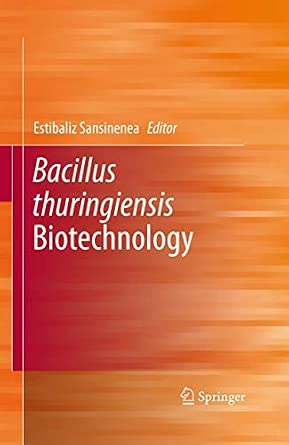
Bacillus thuringiensis Biotechnology 2012th Edition
Author(s): Estibaliz Sansinenea
- Publisher: Springer
- Publication Date: 14 Mar. 2012
- Edition: 2012th
- Language: English
- Print length: 408 pages
- ISBN-10: 9789400730205
- ISBN-13: 9789400730205
Book Description
Bacillus thuringiensis (Bt) has been used as a biopesticide in agriculture, forestry and mosquito control because of its advantages of specific toxicity against target insects, lack of polluting residues and safety to non-target organisms. The insecticidal properties of this bacterium are due to insecticidal proteins produced during sporulation. Despite these ecological benefits, the use of Bt biopesticides has lagged behind the synthetic chemicals. Genetic improvement of Bt natural strains, in particular Bt recombination, offers a promising means of improving efficacy and cost-effectiveness of Bt-based bioinsecticide products to develop new biotechnological applications. On the other hand, the different Bacillus species have important biotechnological applications; one of them is carried out by producing secondary metabolites, which are the study object of natural product chemistry. The amazing structural variability of these compounds has attracted the curiosity of chemists and the biological activities possessed by natural products have inspired the pharmaceutical industry to search for lead structures in microbial extracts. Screening of microbial extracts reveals the large structural diversity of natural compounds with broad biological activities, such as antimicrobial, antiviral, immunosuppressive, and antitumor activities that enable the bacterium to survive in its natural environment. These findings widen the target range of Bacillus spp., in special B. thuringiensis, besides insecticidal activity and help people to better understand its role in soil ecosystem.
Editorial Reviews
From the Back Cover
Bacillus thuringiensis (Bt) has been used as a biopesticide in agriculture, forestry and mosquito control because of its advantages of specific toxicity against target insects, lack of polluting residues and safety to non-target organisms. The insecticidal properties of this bacterium are due to insecticidal proteins produced during sporulation. Despite these ecological benefits, the use of Bt biopesticides has lagged behind the synthetic chemicals. Genetic improvement of Bt natural strains, in particular Bt recombination, offers a promising means of improving efficacy and cost-effectiveness of Bt-based bioinsecticide products to develop new biotechnological applications. On the other hand, the different Bacillus species have important biotechnological applications; one of them is carried out by producing secondary metabolites, which are the study object of natural product chemistry. The amazing structural variability of these compounds has attracted the curiosity of chemists and the biological activities possessed by natural products have inspired the pharmaceutical industry to search for lead structures in microbial extracts. Screening of microbial extracts reveals the large structural diversity of natural compounds with broad biological activities, such as antimicrobial, antiviral, immunosuppressive, and antitumor activities that enable the bacterium to survive in its natural environment. These findings widen the target range of Bacillus spp., in special B. thuringiensis, besides insecticidal activity and help people to better understand its role in soil ecosystem.