 Wow! eBook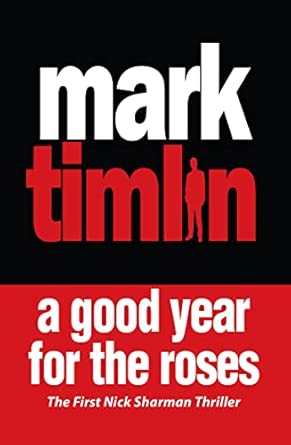
A Good Year for the Roses
Author(s): Mark Timlin (Author)
- Publisher: No Exit Press
- Publication Date: 21 Aug. 2013
- Language: English
- Print length: 288 pages
- ISBN-10: 1843440792
- ISBN-13: 9781843440796
Book Description
The First Nick Sharman Thriller
Nick Sharman is nobody’s favourite person. Ex-cop, ex-doper, invalided out of the Met after a stray bullet in the foot saved him from an investigation into the missing evidence from a drugs haul.
The cops don’t like him. The villains don’t like him. Sharman is unemployable. So he’s hired himself an office and set up shop as a private investigator in his south London patch.
Divorces and debt-collecting were what he expected. What he gets is Patsy Bright, young, pretty and missing. Her father wants her back. She’s a good girl, a model, and only a little bit into drugs. With Sharman’s connections it should be a piece of cake.
Only when he comes to with a split head, a pocketful of planted heroin, a dead girl and two policemen acting on a tip-off, does Sharman realise this case is different. And serious. And personal.
Editorial Reviews
About the Author
In over twenty years as an author, Mark Timlin has written some thirty novels under many different names, including best selling books as Lee Martin, innumerable short stories, an anthology and numerous articles on diverse subjects for various newspapers and magazines.
Excerpt. © Reprinted by permission. All rights reserved.
A Good Year for the Roses
By Mark Timlin
Oldcastle Books
Copyright © 1989 Mark Timlin
All rights reserved.
ISBN: 978-1-84344-079-6
CHAPTER 1
I opened for business on a chilly morning, in a cool August, in a cold and wet, forgettable summer. The headlines in the newspapers told me that there had been a radiation leak at Sellafield Nuclear Re-Processing Plant, Beirut had been bombed for the third successive day, a fourteen year old girl had been raped and left for dead in Clapham, and England had lost in the final test at Edgbaston. It must have been someone’s birthday, or someone’s wedding anniversary. Somebody had cause to celebrate. But the Lord Mayor didn’t come down and cut a pink ribbon for me. I didn’t notice the earth move.
I unlocked my office and looked around the room furnished by a second hand commercial furniture company, slumped down in a second hand typist’s chair and propped my foot in the open drawer of a second hand desk. My foot was sore. I’d been shot through it by a bullet from a .38 calibre Colt Detective Special two years previously. Ultimately that slug of lead had brought me to where I was sitting. Although I had made virtually a 100% recovery from the injury, I still limped slightly when the weather was wet or cold, and as I said, it had been both that year. It felt good to take the weight off my old wound. I wasn’t a walking miracle.
Starting a new venture left me with a certain feeling of anti-climax. But then I felt anti-climax every morning when I woke up.
I was resting on an overdraft that resembled the national debt of a small South American country, like more successful men rest on their laurels. I was in my peak earning years and worth less than zero.
The office I had rented was situated in a cul-de-sac leading to a railway station deep in South London. I had been born and bred in the area and when I was a baby, my mother had taken me for long walks across the grounds of a riding school which was now a council estate where two thousand souls lived. She’d bought our vegetables from a market garden where a used car lot now stood.
The city had eaten into the suburbs like a giant cancer and gobbled up the little communities one by one. Digesting them into a sprawling mass of shopping precincts, slum flats and rows of houses stretching from the river for mile upon soulless mile. The few remaining green areas surrounded by concrete and brick like a wagon train encircled by Apaches.
To most people, that little manor in which I’d put my roots down again was just an insignificant name on the map, a place they drove through to reach the inner city or out to the green hills of Southern England. The South Circular road cut through Tulse Hill like a wire through mouldy cheese. On one side of the road lived the have-nots, on the other the have-lesses. The sign-posts pointing out were a constant reminder that things could be better.
It hadn’t always been like that of course. It used to be a genteel area, full of elderly ladies sipping coffee together in tiny cafes, served by young girls in smart uniforms. Now it had slipped down the charts and was full of shops selling greasy take-away food or cut price furniture. The ladies had died or moved down the line to Surrey. The girls were married now and lived on the council estate. Things had gone full circle. After my short period away, I’d returned to the kebabs and chop suey and litter on the pavements. I’d cashed in my chance of a ticket out again.
The single shop front I sat in had previously housed a coal-merchants. It was in a hundred year old terrace of buildings that were dark with soot from the railway. The narrow windows of the flats above the shops looked over toward


