 Wow! eBook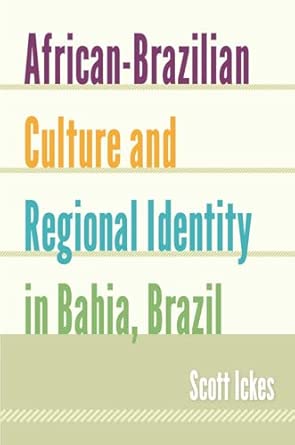
African-Brazilian Culture and Regional Identity in Bahia, Brazil
Author(s): Scott Ickes (Author)
- Publisher: University Press of Florida
- Publication Date: 30 Sept. 2013
- Edition: Illustrated
- Language: English
- Print length: 320 pages
- ISBN-10: 0813044782
- ISBN-13: 9780813044781
Book Description
Salvador, the capital of the state of Bahia, is often referred to as “Brazil’s Black Rome.” Culturally complex, vibrant, and rich with history, its African-descended population is one of the largest in Latin America. Yet despite representing a majority of the population, African-Bahians remain a marginalized racial group within the state as a whole.
In African-Brazilian Culture and Regional Identity in Bahia, Brazil, Scott Ickes examines how in the middle of the twentieth century, African-Bahian cultural practices such as capoeira, samba, and Candomblé during carnival and other popular religious festivals came to be accepted as essential components of Bahian regional identity. Previously, public performances of traditionally African-Bahian practices were repressed in favor of more European traditions and a more “modern” vision.
Newfound acceptance of these customs was a democratic move forward, but it also perpetuated the political and economic marginalization of the black majority. Ickes argues that cultural-political alliances between African-Bahian cultural practitioners and their dominant-class allies nevertheless helped to create a meaningful framework through which African-Bahian inclusion could be negotiated–a framework that is also important in the larger discussions of race and regional and national identity throughout Brazil.
Scott Ickes is assistant professor of history at the University of South Florida.
Editorial Reviews
From the Back Cover
“A sophisticated and thoughtful analysis of mid-twentieth-century cultural politics, recognizing both the fundamental changes that took place as Afro-Bahian cultural politics became incorporated into representations of Bahia and the limited material gains for Afro-Bahians during this period.”—Hendrik Kraay, editor ofNegotiating Identities in Modern Latin America
Salvador, the capital of the state of Bahia, is often referred to as “Brazil’s Black Rome.” Culturally complex, vibrant, and rich with history, its African-descended population is one of the largest in Latin America. Yet despite representing a majority of the population, African-Bahians remain a marginalized racial group within the state as a whole.
In African-Brazilian Culture and Regional Identity in Bahia, Brazil, Scott Ickes examines how in the middle of the twentieth century, African-Bahian cultural practices such as capoeira, samba, and Candomblé during carnival and other popular religious festivals came to be accepted as essential components of Bahian regional identity. Previously, public performances of traditionally African-Bahian practices were repressed in favor of more European traditions and a more “modern” vision.
Newfound acceptance of these customs was a democratic move forward, but it also perpetuated the political and economic marginalization of the black majority. Ickes argues that cultural-political alliances between African-Bahian cultural practitioners and their dominant-class allies nevertheless helped to create a meaningful framework through which African-Bahian inclusion could be negotiated—a framework that is also important in the larger discussions of race and regional and national identity throughout Brazil.


