Adapting Philosophy: Jean Baudrillard and *the Matrix Trilogy*

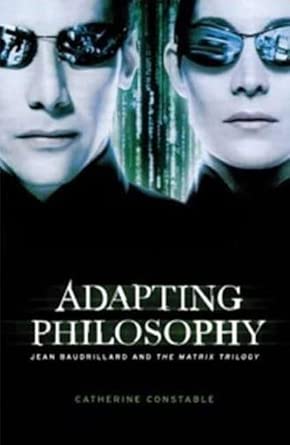
Adapting Philosophy: Jean Baudrillard and *the Matrix Trilogy* book cover

Adapting Philosophy: Jean Baudrillard and *the Matrix Trilogy*

Author(s): Catherine Constable (Author)

  • Publisher: Manchester University Press
  • Publication Date: 1 May 2009
  • Language: English
  • Print length: 192 pages
  • ISBN-10: 0719075319
  • ISBN-13: 9780719075315

Book Description

Adapting Philosophy looks at the ways in which The Matrix Trilogy adapts Jean Baudrillard’s Simulacra and Simulation, and in doing so creates its own distinctive philosophical position. Where previous work in the field has presented the trilogy as a simple ‘beginner’s guide’ to philosophy, this study offers a new methodology for inter-relating philosophy and film texts, focusing on the conceptual role played by imagery in both types of text. This focus on the figurative enables a new-found appreciation of the liveliness of philosophical writing and the multiple philosophical dimensions of Hollywood films. The book opens with a critical overview of existing philosophical writing on The Matrix Trilogy and goes on to draw on adaptation theory and feminist philosophy in order to create a new methodology for interlinking philosophical and filmic texts. Three chapters are devoted to detailed textual analyses of the films, tracing the ways in which the imagery that dominates Baudrillard’s writing is adapted and transformed by the trilogy’s complex visuals and soundtrack. The conclusion situates the methodology developed throughout the book in relation to other approaches currently emerging in the new field of Film-Philosophy. The book’s multi-disciplinary approach encompasses Philosophy, Film Studies and Adaptation Theory and will be of interest to undergraduates and postgraduates studying these subjects. It also forms part of the developing interdisciplinary field of Film-Philosophy. The detailed textual analyses of The Matrix Trilogy will also be of interest to anyone wishing to deepen their understanding of the multi-faceted nature of this seminal work. — .

Editorial Reviews

Book Description

Offers a critical reappraisal of a prolific and popular genre, as well as bringing new material into the broader field of Television Studies.

From the Inside Flap

Adapting Philosophy looks at the ways in which The Matrix Trilogy adapts Jean Baudrillard s Simulacra and Simulation, and in doing so creates its own distinctive philosophical position. Where previous work in the field has presented the trilogy as a simple beginner s guide to philosophy, this study offers a new methodology for inter-relating philosophy and film texts, focusing on the conceptual role played by imagery in both types of text. This focus on the figurative enables a new-found appreciation of the liveliness of philosophical writing and the multiple philosophical dimensions of Hollywood films. The book opens with a critical overview of existing philosophical writing on The Matrix Trilogy and goes on to draw on adaptation theory and feminist philosophy in order to create a new methodology for interlinking philosophical and filmic texts. Three chapters are devoted to detailed textual analyses of the films, tracing the ways in which the imagery that dominates Baudrillard s writing is adapted and transformed by the trilogy s complex visuals and soundtrack. The conclusion situates the methodology developed throughout the book in relation to other approaches currently emerging in the new field of Film-Philosophy. The book s multi-disciplinary approach encompasses Philosophy, Film Studies and Adaptation Theory and will be of interest to undergraduates and postgraduates studying these subjects. It also forms part of the developing interdisciplinary field of Film-Philosophy. The detailed textual analyses of The Matrix Trilogy will also be of interest to anyone wishing to deepen their understanding of the multi-faceted nature of this seminal work.

From the Back Cover

Adapting Philosophy looks at the ways in which The Matrix Trilogy adapts Jean Baudrillard’s Simulacra and Simulation, and in doing so creates its own distinctive philosophical position. Where previous work in the field has presented the trilogy as a simple ‘beginner’s guide’ to philosophy, this study offers a new methodology for inter-relating philosophy and film texts, focusing on the conceptual role played by imagery in both types of text. This focus on the figurative enables a new-found appreciation of the liveliness of philosophical writing and the multiple philosophical dimensions of Hollywood films. The book opens with a critical overview of existing philosophical writing on The Matrix Trilogy and goes on to draw on adaptation theory and feminist philosophy in order to create a new methodology for interlinking philosophical and filmic texts. Three chapters are devoted to detailed textual analyses of the films, tracing the ways in which the imagery that dominates Baudrillard’s writing is adapted and transformed by the trilogy’s complex visuals and soundtrack. The conclusion situates the methodology developed throughout the book in relation to other approaches currently emerging in the new field of Film-Philosophy. The book’s multi-disciplinary approach encompasses Philosophy, Film Studies and Adaptation Theory and will be of interest to undergraduates and postgraduates studying these subjects. It also forms part of the developing interdisciplinary field of Film-Philosophy. The detailed textual analyses of The Matrix Trilogy will also be of interest to anyone wishing to deepen their understanding of the multi-faceted nature of this seminal work.

About the Author

Catherine Constable is Associate Professor in Film Studies at the University of Warwick

View on Amazon

电子书代发PDF格式价格30我要求助
未经允许不得转载:Wow! eBook » Adapting Philosophy: Jean Baudrillard and *the Matrix Trilogy*