 Wow! eBook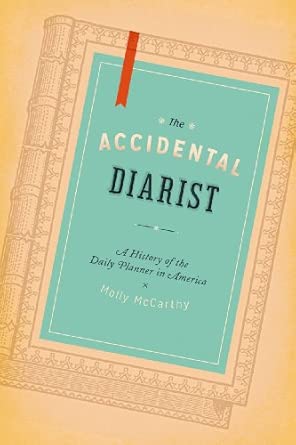
The Accidental Diarist – A History of the Daily Planner in America
Author(s): Molly Mccarthy (Author)
- Publisher: University of Chicago Press
- Publication Date: 13 Sept. 2013
- Edition: Illustrated
- Language: English
- Print length: 280 pages
- ISBN-10: 022603321X
- ISBN-13: 9780226033211
Book Description
Editorial Reviews
Review
About the Author
Excerpt. © Reprinted by permission. All rights reserved.
The Accidental Diarist
A History of the Daily Planner in America
By MOLLY MCCARTHY
THE UNIVERSITY OF CHICAGO PRESS
Copyright © 2013 The University of Chicago
All rights reserved.
ISBN: 978-0-226-03321-1
Contents
Introduction………………………………………………………1CHAPTER 1. The Almanac as Daily Diary………………………………..11CHAPTER 2. The Birth of a Daily Planner………………………………54CHAPTER 3. The Profits of an Abbreviated Self…………………………102CHAPTER 4. Making a Diary Standard…………………………………..153CHAPTER 5. The Daily Planner Meets the Adman………………………….201Epilogue………………………………………………………….243Acknowledgments……………………………………………………249Notes…………………………………………………………….255Index…………………………………………………………….299
Excerpt
CHAPTER 1
The Almanac as Daily Diary
George Washington made a habit of writing at the top of each page inhis diary the phrase “Where & how my time is Spent.” The motto,or mantra, certainly seems in character for a general revered for beingmethodical and disciplined. Yet the phrase reveals more than Washington’sidiosyncratic quest for order and self-control. His choice of wordsis symbolic and reflects the way an entire generation of early Americansconceived of and accounted for time. Time’s passage, for Washingtonand his contemporaries, remained tied to the days on the calendar morethan the hands of a clock. Time proceeded a day at a time with few reasonsto parse the days more finely than by forenoon, afternoon, and eveningand little need to look beyond the present day to set future appointments.Washington’s phrase had more to do with marking the days asthey passed, setting them in order and in time. But Washington couldnot do this without some help. For assistance, he looked to an almanac,or more specifically, to the pages of the Virginia Almanack.
In fact, Washington’s diary and his annual were inextricably linkedsince Washington made his daily entries on blank pages sewn inside theVirginia Almanack. Washington’s diary and his almanac, then, wereone and the same. While it is no secret that many of the Founding Fatherswere avid diarists, few of their biographers have pointed out exactlywhat they were writing in. Thomas Jefferson, too, turned to an almanacfor a diary, as did many colonists of his generation, both notableand unknown. Converting an almanac into a daily diary had roots inthe Mother Country, and an almanac was among the first books the settlersof Massachusetts Bay imported into the colonies. When John Winthroparrived in Salem aboard the Arbella in the spring of 1630, the firstgovernor of Massachusetts Bay carried with him a draft of “A Model ofChristian Charity,” the opening pages of his journal that would form thebasis for his History of New England, and a copy of Allestree’s Almanacfor 1620. A decade earlier, Winthrop’s father, Adam, had convertedthe annual into a diary for his grandson John Jr., so that he might learnthe record-keeping habit when he came of age. Although Winthrop andhis Puritan descendants rarely mentioned it, the almanac diary was farmore common in British America than the diary of religious examination.It was the daily agenda of the colonial age. By the time Washingtonchose the Virginia Almanack to set down his daily whereabouts, thealmanac diary had assumed a central role in how these early Americansmarked their days and made sense of their world.
The almanac is key to understanding the full meaning behind Washington’schoice of words. The phrase was hardly accidental and informedby the distinctive conception of time the almanac reinforced. Schedulingevents would be difficult, and nearly impossible, without its calendar.How else might Washington or other users know when to be somewhereon a certain day or at an appointed time? For those interestedin increments smaller than the day, the astronomical data embedded inthe calendar was equally critical since that was how those temperamentalclocks remained calibrated. Sociologists have long acknowledged theimportance of clocks and calendars for participating in social life. Thealmanac supplied the “means and ways to ‘time'” their behavior andprovided diarists with a framework on which to inscribe their own experiences,moving both outward and inward simultaneously. That structurewas much less compartmentalized than today with the “rhythmicbeat” of most activities such as work and socializing more attuned tothe day and the week than the hour or minute. If Washington needed toknow what day it was or how many days before the next Sabbath, the calendaralone might suffice. Others achieved more benefits by adding a diarythat ordered their past and brought structure to the present. Washington’smantra indicated a need to order his experiences and exert somecontrol over events that might otherwise feel disorderly and random.Customers would have to wait for products like the nineteenth-centurypocket diary that, similar to today’s date books or blank calendars, alloweda user to look ahead and record future events in a preformatted,dated space. The timing in almanac diaries, for the most part, workedretrospectively.
As prologue, this chapter explains how the almanac served as precursorand instigator of the daily planner. The daily planner would neverhave come about without the almanac. As America’s first best seller (aspopular as the Bible), the almanac had a powerful influence on the wayearly Americans viewed time as well as money. It’s difficult to accountfor the great explosion in diary keeping and the rise of the daily plannerin the nineteenth century without explaining the groundwork the almanacdiary and its followers laid. From the perspective of its customers,the almanac accustomed them not only to a particular sense of timeand its passage but also to a habit of recording that appeared matter offact and abbreviated yet was rich with meaning. From the vantage pointof the printers and booksellers hawking the popular annual, the almanacprovided a reliable source of income year after year, even in the worst financialtimes.
Our modern-day view of the almanac is obscured by its folksy legacy:the Old Farmer’s Almanac. Still published annually, the periodical,founded by Robert B. Thomas in 1792, is most renowned for its weatherpredictions. As soon as the latest version of the Old Farmer’s Almanachits newsstands every fall, broadcasters take to the airwaves, often highlightingthe more outrageous or farfetched of forecasts, such as the yearit foretold a “snowy winter” in Las Vegas. Although Americans mightstill peruse its pages to test its predictions or consult the quirkier columns,the almanac has become, for the most part, an antiquated conversationpiece.
To Washington’s generation, the almanac was neither quaint norfolksy. America’s first president would have a difficult time accepting thealmanac’s fall from grace, because for him, and for every colonist whocame before him, the almanac was everything. It told him the time, calculatedthe interest on his loans, directed him to the nearest inns, andentertained him with its poetry. Before even acknowledging its role asa diary, Washington recognized the almanac as an indispensable calendarand local guide. More than many early newspapers, almanacs werea font of local information. They provided readers with the kind of factsneeded to negotiate the geographic and commercial terrain of earlyAmerica. A colonist might turn to a newspaper in search of an advertisementfor books or assorted “English Goods,” but he’d turn to his almanacto consult a list of roads from Boston to New York or New Yorkto Philadelphia. He might also find there, when the region’s courts werein session, a list of local officials, coach fares, and currency conversiontables.
The almanac enjoyed a status in early America unparalleled by anybook, except the Bible. Every colonial household was sure to have an almanachanging on a peg by the hearth. Washington would have agreedwith the author who cautioned his customers about the dangers of doingwithout: “A person without an almanac is somewhat like a ship withouta compass; he never knows what to do, nor when to do it.” It’s thesame feeling someone a century later might have experienced withouthis pocket watch. Even though that analogy may seem farfetched, manyeighteenth-century Americans considered the almanac, not the clock,the authority on time. Take away the interest tables, the essays, the recipes,and other features publishers added over time, and the four- by six-and-a-half-inchcrudely stitched pamphlet was—at its most basic level—acalendar.
The almanac provided a system, a form where none existed. It allowedmen such as Washington to fill in the blanks rather than makeup something entirely on his own. Just as we mark up our calendars today,write out a grocery list, or balance a checkbook, there is a satisfactionthat comes with getting things down on paper. However, in this casethe uses were prompted by the almanac’s features, many of which camedown to time and matters of the pocketbook: listing expenses, recordingloans, noting debts, or figuring out how much money until payday.
It’s no wonder the almanacs that survive are so fragile. They look asif they had been carried around in a breast pocket or thumbed to neardisintegration. Many scribbled sums or recorded a settled debt in themargins. In an advertisement placed in the Virginia Gazette on December12, 1777, a subscriber offered a $10 reward to anyone who might findhis “small red pocket book containing a blank almanack, and the followingbills, viz. One twelve pounds of the James river bank, one eight,one six and one five dollar bill, a four and one shilling bill with two parcelsof needles.” Almanacs became vital personal accessories, as crucialas a hat or coat in foul weather. They were cheap, portable, and compact,a convenient accoutrement for the merchant about town as well asa farmer in the woods.
Booksellers in England had promoted the almanac’s suitability as adiary for more than a half-century before Adam Winthrop modeled onefor his grandson. From a production standpoint, there were a few methodsalmanac makers used to aid customers in converting their pamphletsinto diaries. If paper was plenty, publishers simply inserted a blank pageopposite the calendar for each month, known in the business as “interleaving.”As early as 1565, Englishman Joachim Hubrigh introduced ABlanke and Perpetuall Almanack “designed primarily for the reader tonote debts, expenses and other ‘things that passeth from time to time(worthy of memory to be registered).'” Imitators soon followed, withEvans Lloyd adopting another method with his 1582 almanac by offeringaccount pages already “marked off in columns headed ‘L.s.d.'” Tosave paper others reserved a column on each calendar page for personalnotes, though, understandably, it allowed for the scantest of insertions.Such almanacs, often called “Blanckes,” offered space opposite the calendarpages for the owner to note debts, expenses, and other “things thatpasseth from time to time (worthy of memory to be registered).”
For the most senior Winthrop, the last directive meant noting whohappened to be preaching, as is evident from the following lines liftedfrom the diary pages of Winthrop’s copy of Allestree’s Almanack:
March 8. The Assises at Bury, Mr. Muninge preached before the Juges.
March 15. Sr. Jo. Deane & my lady dined wth us.
March 25. The year 1620 beginneth.
Aprill 17. Mr. Rogers of Dedham preached at Carsey.
May 9. Mr. Birde preached at B. & Mde Bacon came to Groton.
June 18. Mr. Smyth of ye K. Colledge preached in Groton. My Cosen Jeremy Ravenpreached at Boxforde on Sonday in the afternoone.
For others, it meant recording the routines of one’s profession, whetheras preacher, farmer, or merchant. Here are the events farmer JoshuaHempstead of New London, Connecticut, chose to memorialize in February1713/4:
Thursd 18 fair. I was at home al day Presing hay. windy.
fryd 19 fair. I was at home Screwing hay al day.
Saturd 20 fair. I was at home Pressing hay al day.
Remarkably, Hempstead continued in similar fashion for another fortyyears. Such practices followed the day’s conventions and were influencedby the contents of the almanac itself. What someone recorded inhis almanac was not so much determined by his personality as the dictatesof a formula that was so predictable some almanac makers pokedfun at their customers’ entries. One London publisher advertised a 1663almanac with a “diary” already printed inside with notes such as “thered cow took bull,” “My son John born,” and “The black cat caught amouse in the barn,” mocking the plain style of the typical diarist. Fewcustomers appeared to care about what publishers thought of their entriessince hundreds of enthusiasts followed Winthrop’s lead.
By the time of America’s founding, George Washington and ThomasJefferson preferred copies of the Virginia Almanack in which to recordtheir daily memoranda. When Washington arrived in Philadelphia in thespring of 1787 without his diary, he wrote his nephew at Mount Vernonand asked for its swift return “under good strong paper cover, sealed upas a letter.” Just in case his nephew did not know where to look, Washingtonadded: “It will be found, I presume, on my writing table.” ForWashington, his almanac was critical to his sense of well-being, an essentialtool that tracked his daily expenses and the events of his publicand private life. Washington, himself, acknowledged as much with hisnow familiar motto: “Where & how my time is Spent.” Nevertheless,even though we might like to think Washington’s diaries more weightyor lofty than those of his contemporaries, his annotated almanacs followeda similar pattern. In the summer of 1771, his almanacs were suffusedwith the business of running his large estate:
July 1. Rid into the Neck to my Harvest People, & back to Dinner. Mr. Robt. Rutherfordcame in the Afternoon & went away again.
2. Rid to Harvest Field in the Neck & back to Dinner.
3. Rid to the Harvest Field in the Neck by the Ferry & Muddy hole Plantations.In the Afternoon Mr. Jno. Smith of Westmoreland came here.
4. At home all day with Mr. Smith. In the Afternoon Jno. Custis came.
5. Mr. Smith set out after breakfast on his journey to the Frederick Sprgs. In theAfternoon I rid to the Harvest Field in the Neck.
6. Writing the forepart of the day. In the afternoon Rid to Harvest Field atMuddy hole.
As formulaic and repetitive as Joshua Hempstead’s entries decadesearlier, Washington’s record keeping was not unique. One needed to lookespecially hard to find anything that might distinguish his daily registerfrom the norm, and only if one knew how to read between the lines. Forinstance, later in the month of July, Washington recorded simply “I setout to Williamsburg,” a remark that meant nothing to the casual readerbut indicated to Washington, author of the line, that he was headed to asession of the Virginia House of Burgesses. In another deceptively routinenote that same month, Washington wrote that “I remaind at homeall day writing my Invoices.” What Washington failed to mention wasthat these orders were for a quarry of luxury goods direct from Londonincluding “a man’s very best Bear. Hat,” a leather portmanteau, saddle,and expensive shoes and boots, purchases he had put on hold due to thecolony’s boycotts of British imports. But Washington did not need tospell out the nature of the invoices since he was the one drafting themand producing copies of all his correspondence sent across the pond.Even the death of his stepdaughter, Patsy Custis, at age seventeengets brief mention in Washington’s annotated Virginia Almanac for1773. The complete entry for June 19 reads: “At home all day. Aboutfive oclock poor Patcy Custis Died Suddenly.” Make no mistake, Patsy’sdeath devastated Washington. But his almanac was no place for the outpouringof such parental grief, which he expressed elsewhere. On theday following Patsy’s death, Washington wrote to Burwell Bassett, layingout the entire, horrible scene for his friend: “yesterday removed theSweet Innocent Girl into a more happy, & peaceful abode than any shehas met with in the afflicted Path she hitherto has trod. She rose fromDinner about four Oclock, in better health and spirits than she appearedto, have been in for some time; soon after which she was siezd with oneof her usual Fits, & expired in it, in less than two Minutes without utteringa Word, a groan, or scarce a Sigh. This Sudden, and unexpectedblow, I scarce need add has almost reduced my poor Wife to the lowestebb of Misery.”
Still, the tragic event did not disrupt Washington’s almanac habit.Patsy died on a Saturday. Without missing a day, Washington dutifullyfulfilled his own promise to record “Where & how my time is Spent” forthe remainder of that month, and beyond. His notes were as straightforwardand devoid of emotion as before Patsy’s passing:
[June] 20. Colo. Fairfax & Lady as also Mr. Massey dind here—Patcy Custis beingburied—the first went away. Mr. Massy stayd.
21. Mr. Massey went away after Breakfast. I continued at home all day.
22. My Brother, his Wife, Miss Reed & Nelly Calvert Dind at Belvoir & returndin the Afternn. I contd, at home all day.
23. My Brother & Family also Mrs. Reed went away early. I contd. at homeall day.
24. Mr. Digges & Mrs. Tracy came here to Dinner also Mr. Hoops & his Wife thelatter of whom went away afterwards as did Mr. Digges. Miss Calvert came inthe Afternoon.
(Continues…)Excerpted from The Accidental Diarist by MOLLY MCCARTHY. Copyright © 2013 by The University of Chicago. Excerpted by permission of THE UNIVERSITY OF CHICAGO PRESS.
All rights reserved. No part of this excerpt may be reproduced or reprinted without permission in writing from the publisher.
Excerpts are provided by Dial-A-Book Inc. solely for the personal use of visitors to this web site.


