Wow! eBook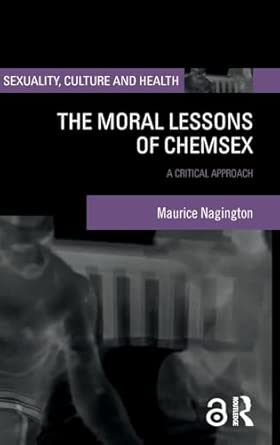
The Moral Lessons of Chemsex: A Critical Approach (Sexuality, Culture and Health)
Author(s): Maurice Nagington (Author)
- Publisher: Routledge
- Publication Date: 26 Dec. 2024
- Edition: 1st
- Language: English
- Print length: 132 pages
- ISBN-10: 1032377577
- ISBN-13: 9781032377575
Book Description
This book explores how gay and bi men’s lived experiences of chemsex intersect with its cultural representations. It argues that while normative moral frameworks are often used to talk about chemsex, chemsex sub-cultures contain their own valuable moral frameworks that can provide lessons about some of the most pressing concerns of contemporary society.
Drawing from a tradition of scholarship that views queer sub-cultures as having pedagogical value for all of society, Maurice Nagington critiques norms that govern lives in relation to: the interactions of bodies, sex and capitalism, trauma and tragedy, the regulation of boundaries, and the disciplinary apparatuses in modern society. Each chapter takes its lead from themes informed by the analysis of longitudinal interviews conducted over a two-year period by the author and an archive of materials concerning chemsex such as films, soundtracks, health promotion pamphlets, newspaper articles, blogs, and ethnographic field notes. Linking the accounts of interviewees to wider debates about and representations of chemsex, this innovative book develops a cohesive narrative about the moral lessons chemsex can teach us.
Contributing to the emerging field of critical chemsex studies, this volume is of interest to advanced students and scholars interested in gender and sexuality studies, sociology of health and illness, medical anthropology, critical public health and criminology, as well those who are involved in chemsex and wish to read and reflect about it as more than just a problem.
The Open Access version of this book, available at http://www.taylorfrancis.com, has been made available under a Creative Commons [Attribution-Non Commercial-No Derivatives (CC-BY-NC-ND)] 4.0 license.
Product description
Review
Nagington has produced a text that thus far has been sorely lacking in the chemsex literature; one that fundamentally rejects the pathologising and moralising sentiment that has dominated writing on this topic to date. His book uses chemsex as a case study to address a key philosophical question, ‘how can we have more liveable and viable lives?’ In doing so, he allows space to interrogate dominant narratives of trauma, risk, and destruction. A thoughtful, enticing, and theory-based exploration of the musicality of chemsex further adds to the novelty of this book and encourages the reader to truly expand their thinking beyond the common tropes that befall this topic – and instead understand chemsex in terms of pleasure rather than fear.
Professor Adam Bourne, Director of Australian Research Centre in Sex, Health and Society, La Trobe University
Nagington’s compelling discussion of chemsex takes us on a critical journey through the debates that have attended its emergence, its representation in a variety of cultural forms, from documentary to pornography, as well as fascinating accounts that participants themselves provide of their experiences. Ultimately, he recognises a positive potential in the physical relations chemsex facilitates, without denying the dangers and dissatisfactions that some would like us to believe exhaust its significance. Not the least of the book’s achievements, though, is its focus on the Manchester, rather than London, scene and the quite distinctive spatial and social relations that characterise it. Chemsex emerges from this essential account by turns demystified, humanised, localised, and theorised.
David Alderson, Professor of Literary and Cultural Studies, University of Manchester
Grounded in generous conversations with chemsex practitioners, The Moral Lessons of Chemsex develops a truly original, creatively theorised perspective on chemsex. For Nagington, chemsex raises the possibility of an ethics that emphasises our permeability and vulnerability to each other. The conception of “visceral solidarity” he develops on this basis is compelling and vital.
Professor Kane Race, University of Sydney
About the Author
Dr Maurice Nagington is a lecturer in Health Sciences at The University of Manchester, UK. His research interests include the intersections of health and cultural analysis, with interests in chemsex, ethics, HIV, sexual health, COVID-19, and palliative care.