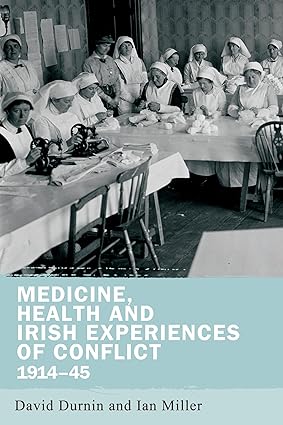
Medicine, Health and Irish Experiences of Conflict, 1914–45
by: David Durnin (Editor), Ian Miller (Editor)
Publisher: Manchester University Press
Edition: 1st
Publication Date: 2016-10-06
Language: English
Print Length: 240 pages
ISBN-10: 9780720000000
ISBN-13: 9780719097850
Book Description
This volume investigates Irish experiences of medicine and health during the First and Second World Wars, War of Independence and Civil War. It examines the physical, mental and emotional impact of conflict on Irish political and social life, as well as medical, scientific and official interventions in Irish health matters. The contributors pose a number of core questions: what made Irish medical and health experiences unique? Did the financial exigencies of war impact detrimentally on Irish healthcare provision? How were the psychological and emotional responses to war managed in Ireland? Did Ireland witness unique disease trends? How did Irish medical communities and volunteers partake in international war efforts? In what ways did wartime circumstances encourage divergence in healthcare provision in Ireland and Northern Ireland? And, finally, what can be learnt by comparing Irish medical and health experiences in both wars? Ultimately, Medicine, health and Irish experiences of conflict, 1914-45 presents two key findings. Firstly, that twentieth-century warfare and political unrest profoundly shaped Irish experiences of medicine and health. Secondly, that Irish political, social and economic contexts added unique contours to those experiences not evident in other countries. In pursuing these ideas, the volume offers an original and focused intervention into a central – but previously unexplored – theme in Irish medical history.
Editorial Reviews
This volume investigates Irish experiences of medicine and health during the First and Second World Wars, War of Independence and Civil War. It examines the physical, mental and emotional impact of conflict on Irish political and social life, as well as medical, scientific and official interventions in Irish health matters. The contributors pose a number of core questions: what made Irish medical and health experiences unique? Did the financial exigencies of war impact detrimentally on Irish healthcare provision? How were the psychological and emotional responses to war managed in Ireland? Did Ireland witness unique disease trends? How did Irish medical communities and volunteers partake in international war efforts? In what ways did wartime circumstances encourage divergence in healthcare provision in Ireland and Northern Ireland? And, finally, what can be learnt by comparing Irish medical and health experiences in both wars? Ultimately, Medicine, health and Irish experiences of conflict, 1914-45 presents two key findings. Firstly, that twentieth-century warfare and political unrest profoundly shaped Irish experiences of medicine and health. Secondly, that Irish political, social and economic contexts added unique contours to those experiences not evident in other countries. In pursuing these ideas, the volume offers an original and focused intervention into a central – but previously unexplored – theme in Irish medical history.